Sony’s New AI Wants to Turn Your Failures into Minigames
We have all been there. You buy a massive, sprawling open-world game, maybe it’s a rigorous RPG or a complex action title. You play it obsessively for two weeks, learning every combo, parry, and dodge. But then, life happens. Work gets busy, you go on vacation, or a different game catches your eye.
Three months later, you decide to boot that old save file back up. You are standing right where you left off: in front of a high-level boss or deep inside a treacherous dungeon. You try to attack, your muscle memory kicked but not hard enough. It is clear you need time to build the muscle memory like earlier. You tried but within seconds, you are staring at a “Game Over” screen.
This is one of the most fundamental frustrations in modern gaming: the “rust” factor. When players return to a game after time away, they often forget the timing, speed, sequence, and direction of inputs required to survive. Traditional tutorials are usually buried in menus or only appear at the very start of the game, meaning they are useless to a player stuck halfway through the story.
The result? Players feel “lost,” frustration mounts, and eventually, they just quit the game entirely. This is bad for gamers who want to see the ending, and it is bad for developers who lose their community.
But what if the game knew exactly why you were failing and built a custom training level just to fix it? That is exactly what a recent patent from Sony proposes.
Sony’s Solution of Personalized AI Training Grounds
Sony’s proposed solution from a patent application moves beyond static tutorials or “easy modes.” Instead, they have a system for AI-generated, personalized minigames built directly from the parts of the game you are struggling with.
The core idea is simple but revolutionary. The system does not just lower the difficulty (which can make a player feel cheated) or give you extra health items. Instead, it acts like a personal sports coach. It analyzes your gameplay to identify the specific skills you lack—whether that’s fast reaction times, complex button combinations, or precision aiming—and generates a small, isolated “minigame” to help you practice that specific skill.
How It Works
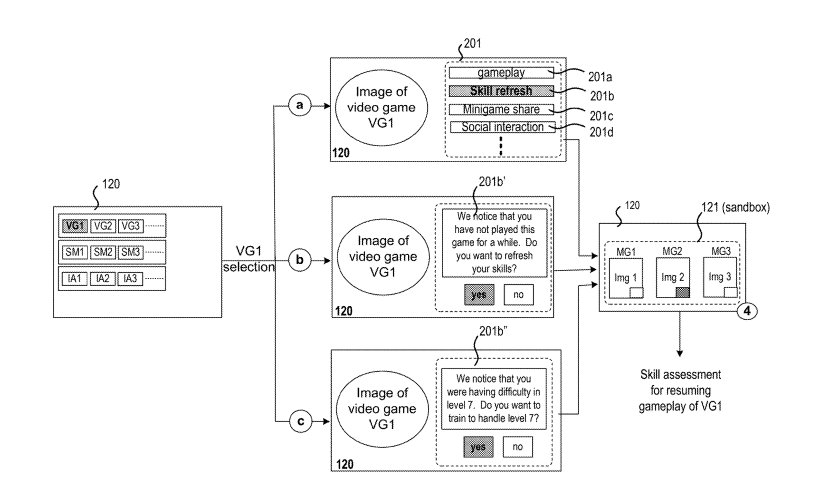
According to the patent, the process happens in a smart, step-by-step loop:
- Analysis: The system constantly monitors your inputs. It looks at how you press buttons, your timing, and where you are failing compared to what the game expects.
- Diagnosis: An AI model, trained on both your history and data from other players, identifies your specific “weakness.” It figures out if you are failing because you are too slow, or because you keep pressing ‘Circle’ instead of ‘X’.
- Generation: The AI identifies a “training zone”, a section of the game you have already seen (to avoid spoilers), that is perfect for practicing that specific weakness. It then generates a minigame using the actual game code.
- Practice: You play this mini-scenario. It focuses entirely on drilling the skill you are missing, like parrying a specific attack or jumping across a gap.
- Re-entry: Once the system detects you have improved, you are sent back to the main game, ready to conquer the obstacle that stumped you.
Why This is a Game-Changer
The beauty of this system is that it solves the root problem. Generic incentives like extra lives or skipping levels don’t actually help the player learn; they just push them past a hurdle they didn’t earn. This often leads to the player hitting a harder wall later on.
By turning failures into playable content, this system allows players to “re-learn” the game without the pressure of losing progress or sitting through a boring text tutorial. It is particularly exciting for adults with busy schedules—the “returning player” demographic—who often abandon great games simply because the learning curve to get back in is too steep. It bridges the gap between being a novice and an expert by using AI in a user-friendly, non-threatening way.
Existing Solutions vs. Sony’s Vision
You might be thinking, “Don’t games already have practice modes?” The short answer is yes, but not like this.
The Current Landscape
Right now, the gaming market has “cousins” to this technology.
- AI Coaches: Tools like trophi.ai (for racing games) or Enidog (for League of Legends) analyze your gameplay telemetry. They can tell you what you did wrong and suggest drills. However, these are usually external tools. They act like a coach analyzing a video tape; they don’t reach into the game code and build a new level for you.
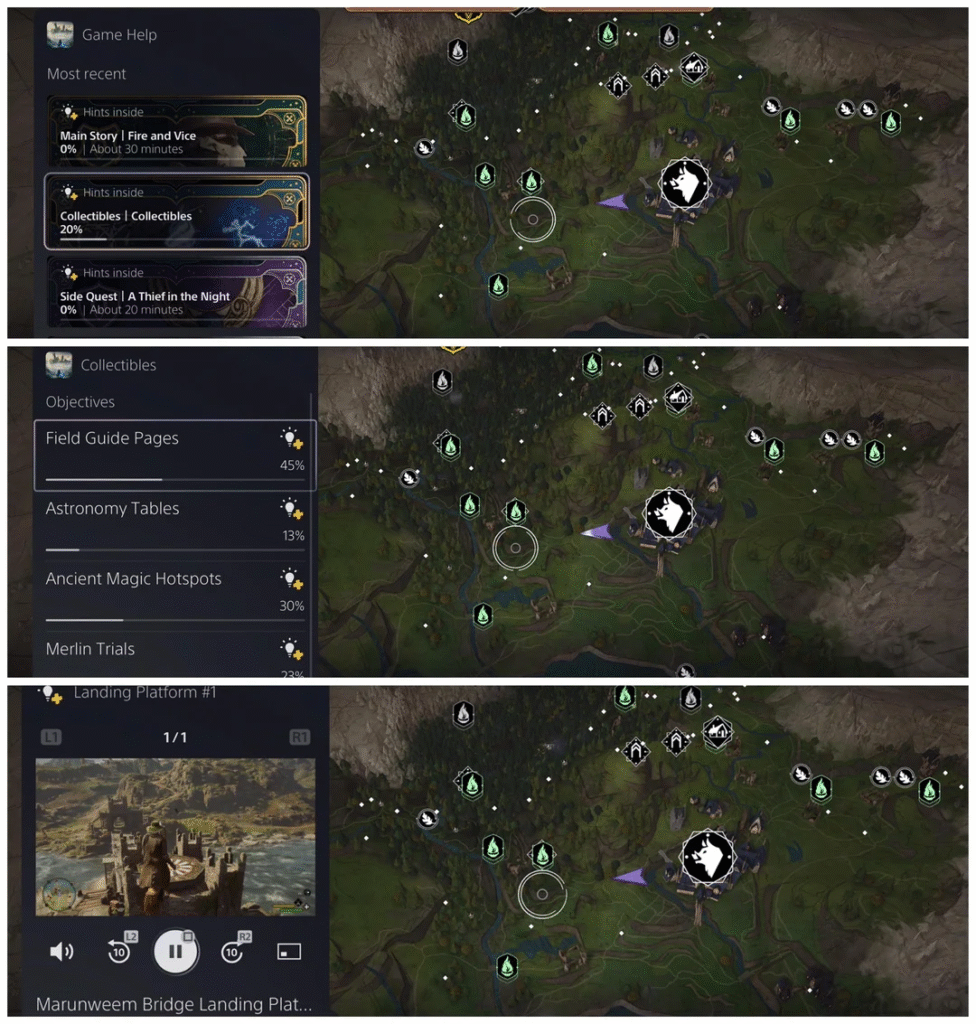
- Game Help Systems: The PlayStation 5 already has a “Game Help” feature that shows video clips or hints based on where you are in a level. While helpful, this is passive. It shows you what to do, but it doesn’t help your fingers actually do it.
- Standard Practice Modes: Fighting games have “dojos” and shooters have “aim trainers” like Aim Lab. These are great, but they are static. They don’t automatically detect that you specifically struggle with the third boss’s fire attack and instantly generate a scenario to practice just that move.
The Sony Difference
Sony’s patent stands out because it integrates three distinct silos: telemetry (data tracking), AI coaching, and in-engine content generation.
The patent describes a system that treats “input skill” (the physical act of playing) as the primary target. It doesn’t just tell you a strategy; it forces you to build muscle memory. Most importantly, it uses the game’s own assets to do it. It’s the difference between watching a YouTube video on how to defeat a boss and playing a 30-second loop of the boss’s hardest attack until you master it.
Conclusion
While this is currently just a patent, and many patents never become final products, it signals a shift in how developers are thinking about difficulty and accessibility. For decades, the answer to “I’m stuck” was “try harder” or “lower the difficulty.”
Sony is proposing a third option: “Let me train you.” By using AI to create bespoke minigames from our own failures, the industry could finally solve the problem of the “rusty” gamer. It promises a future where taking a three-month break doesn’t mean you have to restart the game, or worse, walk away from it forever. It blurs the line between a game and a personal trainer, ensuring that the challenge remains fun, not frustrating.