IBM’s Solution for Direct Air Capture of CO2
Direct air capture (DAC) of carbon dioxide (CO₂) faces several key challenges despite its technical feasibility. One major issue is the high cost and energy consumption needed to run these systems, especially because capturing CO₂ directly from air requires more energy than capturing it from concentrated sources like factories. This is due to the need for high regeneration temperatures and additional power to move large volumes of air.
Another challenge is that DAC mostly produces CO₂, which has limited immediate economic value. Choosing the right capture materials is also difficult, and land use for large-scale DAC setups can be a concern. Some systems aim to capture both CO₂ and water, which could reduce the need for energy-intensive desalination. Technologies like solar updraft towers could help power DAC systems and extract water, but their high upfront costs and limited efficiency have slowed adoption.
IBM’s patent proposed a solution in the form of a sloped solar updraft tower and power plant (SSUPP) that captures carbon dioxide (CO₂) from the air, produces clean energy, and even extracts water—all in one system. Traditional direct air capture (DAC) systems only remove CO₂ from the air and usually require a lot of energy. In contrast, this new system works using sunlight and doesn’t need external power, making it ideal for hot, dry, and remote locations.
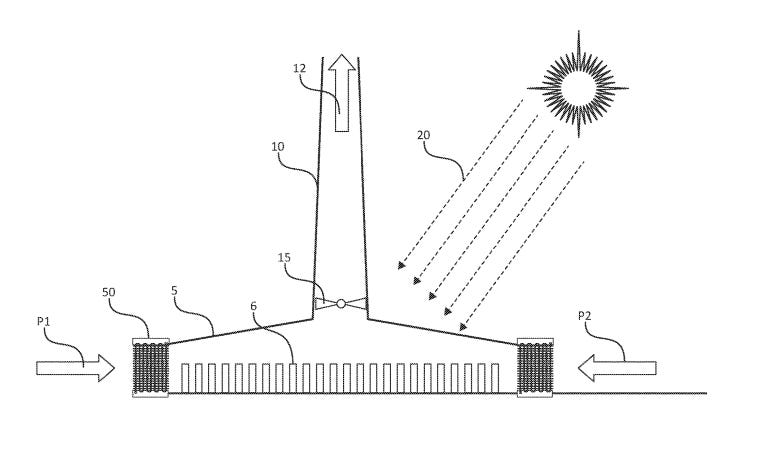
Here’s how it works in simple terms: A large glass-covered area on a sloped hill heats the air underneath using sunlight. This hot air rises through a tall tower, creating a natural airflow that spins turbines to generate electricity. As the air enters the system, special materials placed at the air inlets capture CO₂ and water vapor with very little resistance, meaning less energy is needed to move air through.
This setup has three big benefits—it generates electricity, pulls CO₂ from the atmosphere to fight climate change, and captures water from even dry desert air. Dry air still has 10 times more water than CO₂, so the water collected can be a useful by-product, especially in areas where fresh water is scarce.
By using sloped land (which isn’t good for farming anyway), the system becomes more efficient and cost-effective. These towers are especially promising in places like Saudi Arabia, where the geography and climate are a perfect fit. Overall, it’s a smart and sustainable way to address energy, water, and climate challenges all at once.