How Google is Pushing Video Ads for More Relevance
Google’s advertising business is massive and central to the company’s financial success. In 2025, Google’s advertising segment generated well over $200 billion in revenue, making up the vast majority of Alphabet’s income and giving it a dominant position in the global advertising market with around 39 % share of the pay-per-click (PPC) advertising space globally.
Google’s ads appear from search results and YouTube videos to millions of websites in its display network. Digital ads not only drive visibility and customer acquisition, but also help brands connect with users early in their decision process. Display ads alone can increase the likelihood of conversions and prompt users to search for brands after exposure.
Because revenue from ads is so critical, Google has strong incentives to keep making them more relevant and less like generic “spam.” Relevant ads are more engaging for users, more profitable for advertisers, and ultimately more valuable for Google’s ecosystem.
However, its ads operation is not perfect and Google knows that. That’s why over time, Google has done so many changes in its ads including format, visualization, targeting, etc.
Video ads in particular saw tremendous growth especially among Automotive, Retail, CPG sectors.
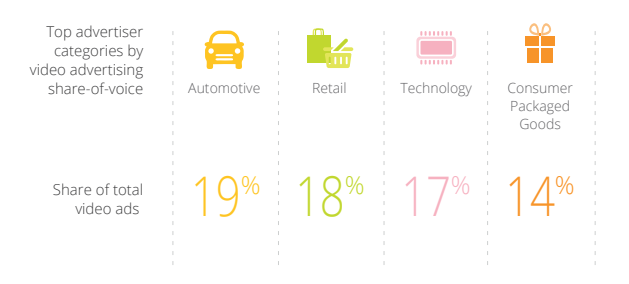
These 4 categories dominated video ads.
However the video ads come with their own challenges.
One specific challenge in display and video ads that Google is tackling directly is how to make advertising content feel personally relevant to each viewer, especially when the ad includes people (faces, models, influencers) who may not resonate with every audience segment.
The Challenge: Personalization doesn’t include who appears on ads
One of the core difficulties in display and video ads is personalization. Unlike text ads that can dynamically change headlines and keywords based on user intent, display and video ads often include visual elements like people and lifestyles that are static once created. An ad may feature a model or influencer, but that choice might not resonate with all audience groups equally.
Take Sydney Sweeney, for example. After her “Great Jeans” ads, people are divided. So, while some people would like her to see in an ad, a different group of people won’t.
This matters because users increasingly expect personalized experiences across digital platforms. Research in general marketing shows that personalization can significantly influence consumer behavior, with many consumers more likely to engage with brands that tailor experiences to their preferences.
Sydney’s ad, controversial though, increased American Eagle brand value by $200 million.
For display ads specifically, click-through rates are much lower than search ads. The average display ad click-through rate on Google’s network is around 0.46 %, compared with 3.17 % for search ads. This highlights how hard it is for visual ad formats to grab attention and compel user interaction.
In addition, repetitive or generic ads can lead to “ad fatigue,” where users mentally tune out advertisements altogether. Research has shown that repetitive exposure to the same kind of ad can decrease viewer engagement over time, making relevant personalization even more important in long campaigns.
The specific challenge the patent addresses is this:
How can Google make display and video ads that include people more relevant to individual viewers, without requiring advertisers to manually create vast numbers of different ad versions?
This problem matters to Google because improved ad relevance can increase engagement and conversion rates, reinforcing advertiser trust and ultimately supporting higher ad revenue. It also helps Google maintain competitive advantage as other platforms invest heavily in AI and personalized advertising formats.
The Solution: See the Person You Like
Google’s patent application proposes a way to dynamically modify ads that include people by swapping individuals in the ad content based on the viewer’s profile and preferences. That way, each viewer would see an ad version that is more likely to resonate with them.
Here’s the step-by-step idea in simple terms:
1. Advertisers take permission from people who can appear in the ad
Advertisers provide Google with a set of approved people such as models, influencers, or spokespersons who can appear in their ads. This step includes all legal permissions needed to ensure rights to use those individuals across different ad versions. The approval ensures compliance with brand safety and licensing and avoids surprises later.
2. Google Identify which part of the ad shows the person
Next, Google looks at the ad image or video and identifies where the person appears, for example, the face, body, or a specific section of the visual. These sections usually include human faces or figures. The result is a kind of map of where a person’s likeness appears in the ad and where it can be swapped.
3. Google looks at the signals to figure out a user’s interest
When a user is about to see a particular ad, the ad system looks at existing signals associated with that user such as their browsing behavior, inferred interests, and context. It uses the same types of data that already support personalized ad targeting.
4. Google Selects the Best Person for the user
Based on these signals and the advertiser’s approved pool of individuals, the system selects the person who is more likely to feel relatable or appealing to that specific viewer. For instance, it could be as simple as showing a girl or boy influencer based on the gender specific targeting for let say a unisex hair salon.
5. Google swaps that person into the ad naturally
Once the ad system figures out the person, it includes the person in the ad for a particular user. It further adjusts visual aspects like lighting, orientation, and background consistency so the final output looks like a single natural creative rather than a collage. We know how Google has got better in image editing.
6. Serving the Personalized Ad
The modified advertisement is delivered to the user in real time through Google’s display or video networks. Each user may see a slightly different version of the same underlying ad, with the human element customized.
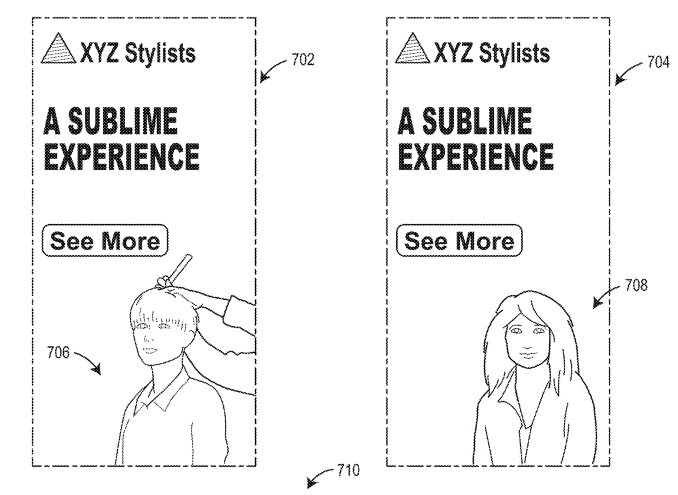
Overall, this system uses a combination of pre-approved creative assets, automated content analysis, real-time decision making, and viewer signals to tailor display and video ads at scale.
How does The Patent Impact Google Business?
By making ads more personally relevant, this patent’s approach could change how people experience online advertising. For viewers, it might mean seeing ads that feel less generic and more reflective of their interests or preferences.
From a business standpoint:
- Advertisers might get better engagement and conversion because the ads appear more relevant.
- Users might find ads slightly less intrusive or repetitive if the content reflects their tastes.
- Google could improve overall ad performance and quality, supporting higher ad prices and stronger revenue growth.
Personalization is already known to influence consumer behavior; broader marketing research suggests that tailored experiences tend to increase conversion and satisfaction. In this context, making the visual human element in ads adaptive could further enhance relevance and campaign effectiveness across diverse audiences.
Conclusion
Google’s advertising business depends on delivering relevant and engaging ads to users while driving strong results for advertisers. As more ads appear in the form of images and videos, it’s no longer enough to just change text or target people by basic categories. Ads should feel more personal to make or leave an impression.
This patent application shows how advertising is slowly changing. Instead of only targeting who sees an ad, companies are starting to change how the ad looks for different viewers. As AI continues to shape digital advertising, being able to adjust not just the message but the people shown in ads may become a key way to keep ads effective and businesses profitable.