When Networks Break, So Does Everything Else — But AI May Have a Fix
Imagine a scenario where the traffic lights stop working, water pipes leak in numerous places, and power cuts affect block after block. And you’re the one responsible for fixing all of it, but no one can tell you exactly what went wrong, or where.
That’s what running a massive cloud network can feel like.
As more of our lives move online from streaming, banking, remote work, social media, to emergency services, the invisible infrastructure powering it all is growing bigger, more complex, and more fragile.
And when it breaks?
The consequences aren’t just frustrating. They’re expensive. They can cause delays in mobile services, impact millions of users, and cost companies real money and reputation.
In the background, cloud networks have to manage millions of servers and virtual machines, all talking to each other, exchanging data, and running applications around the clock. These systems rely on countless “nodes” (like control rooms) and network functions that must work flawlessly. If even a small fraction of them fail or lag, it can ripple through the entire system like a power outage in a city grid.
Now here’s the real kicker: even when something does go wrong, finding out what went wrong and why can take hours or even days. That’s because cloud environments generate a tsunami of data — logs, metrics, traces, and event records — and sifting through all that noise manually is exhausting, slow, and prone to error.
And that’s where Microsoft is stepping in with something interesting but surprising, i.e, GPT.
The Smart Way to Ask Smarter Questions
Microsoft is developing a solution that doesn’t just collect telemetry data from these giant systems — it understands it.
Their Innovation is what they’re calling a smart prompt generator. An AI-powered detective that reads all the system’s signals like logs, errors, events, and traces. Then it crafts a highly specific smart question to ask a generative AI model like GPT.
Why does this matter? GPT models are powerful, but they need the right kind of input to give meaningful answers. If you throw unstructured data at them, the output can be vague or irrelevant.
But if you ask the right question, you can get very precise, actionable answers — including what caused the issue and how to fix it.
That’s exactly what Microsoft’s system is doing:
- It looks at what type of network function is misbehaving.
- It extracts the most relevant bits of data.
- It forms a prompt that says, in essence: “Hey GPT, this is the issue I see — what’s likely causing it and what should I do next?”
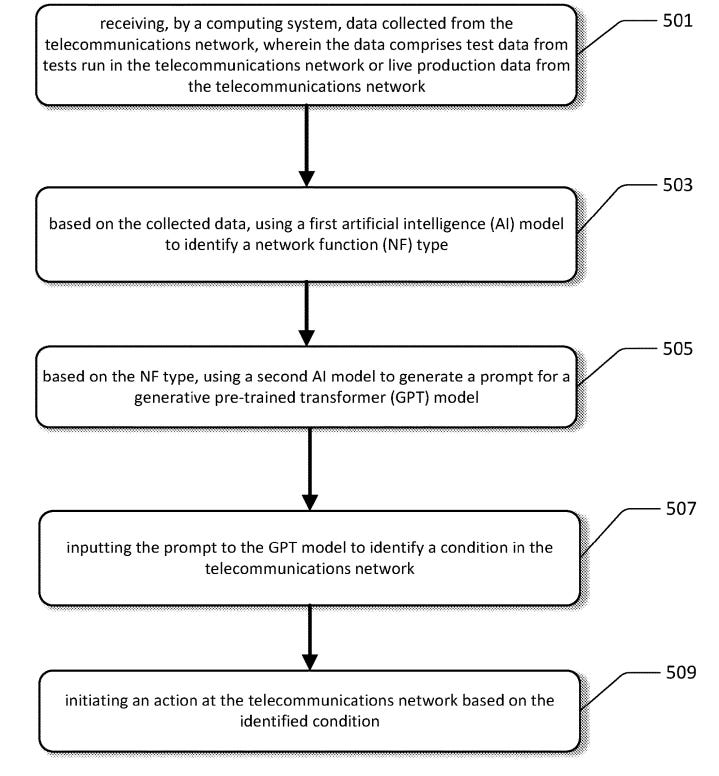
GPT then responds with root cause insights and clear remediation steps.
It’s like giving every network engineer a genius assistant that reads all the logs in milliseconds, understands the context, and gives a straight answer.
Why This Changes the Game
To appreciate how big of a shift this is, consider what happens today. If a problem shows up in a data center:
- Engineers might spend hours combing through logs.
- Multiple teams may have to get involved — operations, dev, security.
- The root cause might remain unclear until after the damage is done (lost revenue, downtime, customer complaints).
With Microsoft’s approach, that entire diagnostic loop can be compressed into minutes or seconds.
No more guessing. No more cross-team wild goose chases. Just fast, intelligent, automated insight.
Time Saved, Energy Preserved, Outages Avoided
While the technology is still being refined, the implications are enormous. If such systems become mainstream:
- Teams could cut incident response time by 80–90%.
- Many problems could be fixed before users even notice them.
- Engineers could spend their time on improvements, not firefighting.
And at a scale where millions of components are interacting 24/7, even a small improvement in uptime or detection speed translates into millions of dollars saved and a much smoother user experience.
The Bigger Picture
What Microsoft is building isn’t just a monitoring tool. It’s a rethink of how we manage cloud complexity using AI — not just for automation, but for understanding.
In a world where digital services are expected to be instant, invisible, and flawless, tools like this could be the difference between staying online and becoming tomorrow’s headline outage.