
Beyond AI Mode: Google To Add AI Chat to Search Results for More Accurate Answers
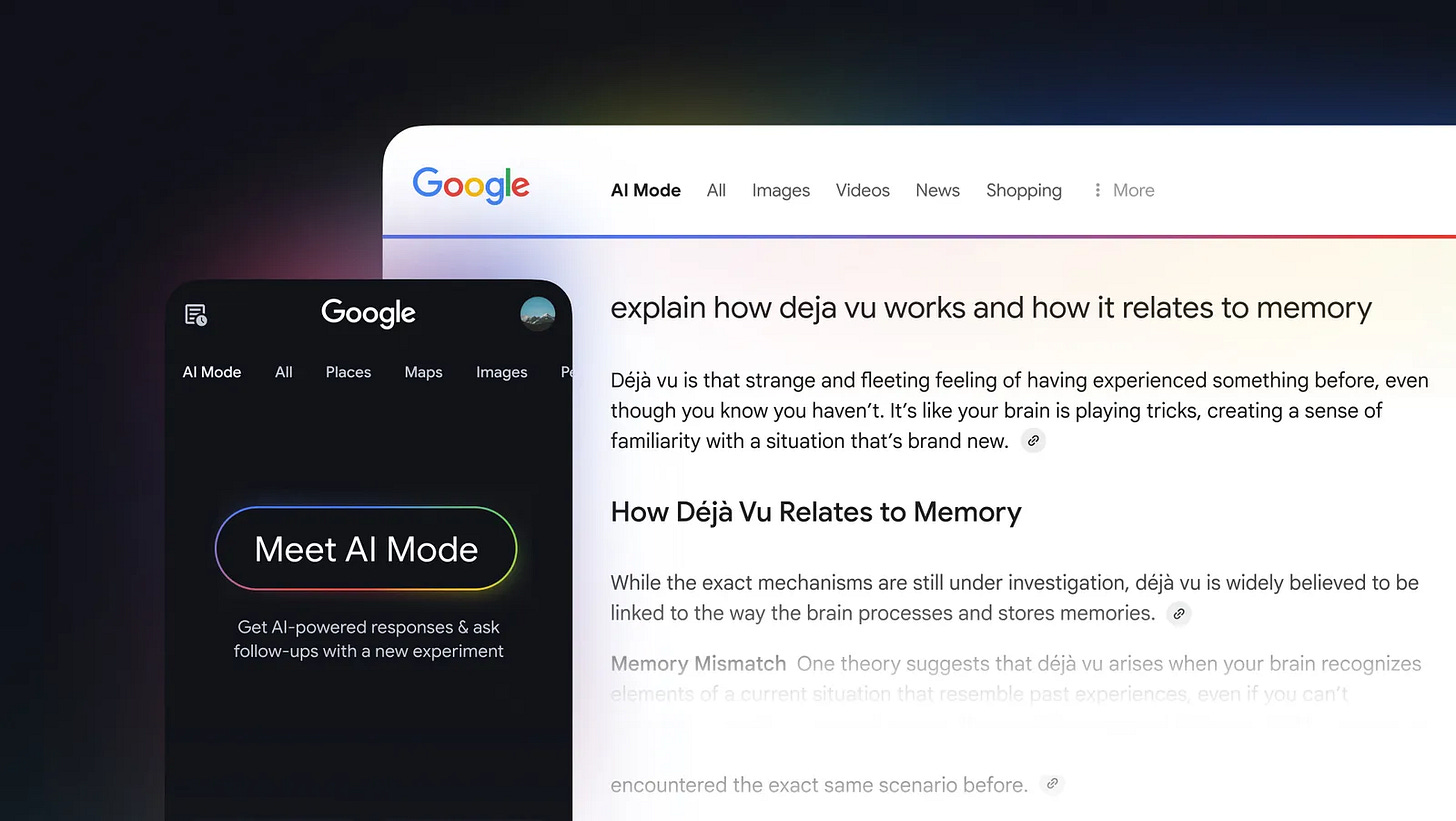
Google’s use of AI overview is already costing websites millions of visitors. People searching for a query will get most answers without visiting a website. And now it’s AI mode that made the situation worse.
Source: Google
SEO specialist are experiencing a crocodile chart in their search console. Meaning, the number of impressions keeps increasing, but the clicks are declining.
And I think Google is taking this to another level.
A recently published patent application by Google tells us another update on the search and answer system, but it is quite different from what I imagined.
The patent titled “Deep linking using generative artificial intelligence” discusses a new system that adds a conversational layer to the search experience.
Rather than just displaying a list of links, the search engine now allows users to interact directly with individual results.
How?
By adding a small search box, say a prompt interface below, to its search results.
Users can type a specific question related to that result, and the AI responds with a conversational answer and deep links to the most relevant content from the same website.
So, rather than giving answers from different sources/websites. It will search for the most relevant answer from a single website.
To explain it in simple terms:
Let’s say you search for “best solar panels for homes.” Among the results is a link to a page on greenenergy.com.
Beneath that result, there’s a text box that lets you ask, “Which ones are under $500?”
Instead of sending you back to the general web, the AI focuses only on greenenergy.com.
It scans the content of that domain, understands your question, and returns a focused response with links to budget panel recommendations.
Google’s Reason for doing this
As per the patent, the system goes beyond traditional search by understanding user intent.
Whether you’re trying to learn, buy, or navigate, the AI adapts its approach.
By narrowing its focus to a specific domain (the site connected to your selected result), the system avoids irrelevant information and speeds up response time.
That means less data used, quicker answers, and better mobile performance. It further reduces the burden on both your device and the servers powering the experience.
Another key feature is its ability to maintain context. You can ask a follow-up question, and the AI will remember your earlier query and refine its answers further.
For example, after asking about budget solar panels, you could follow up with “Which ones are best for cold climates?” and the AI will keep the original context in mind.
This approach would work better for e-commerce.
Suppose a user asks about products listed in a search result. In that case, the AI can directly fetch product details, offer comparisons, or even add items to a shopping cart on the related site.
What Changes to Expect?
This is particularly good for a website ranking at the top because, with this method, Google and the users will most likely interact with that website.
But changes are that Google will implement this to favour the website with ad results. Even in the patent search images, you can see the “sponsored” links.
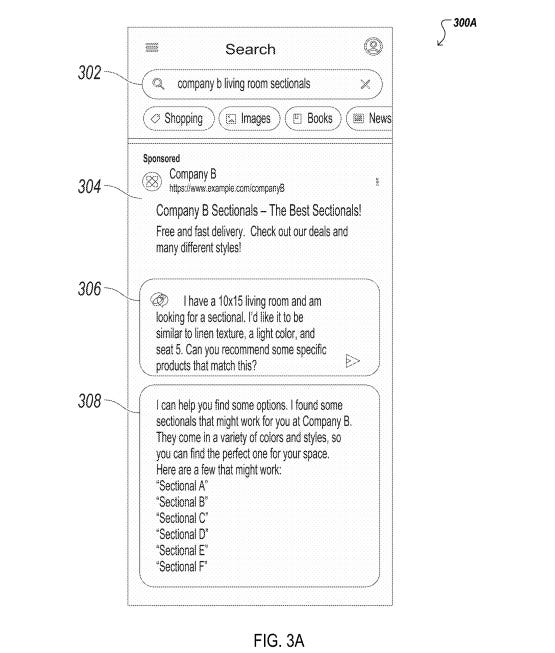
So, it makes sense that Google will use this method for ads.
Whatever the case, we will surely going to see a lot of changes in the search experience in Google.