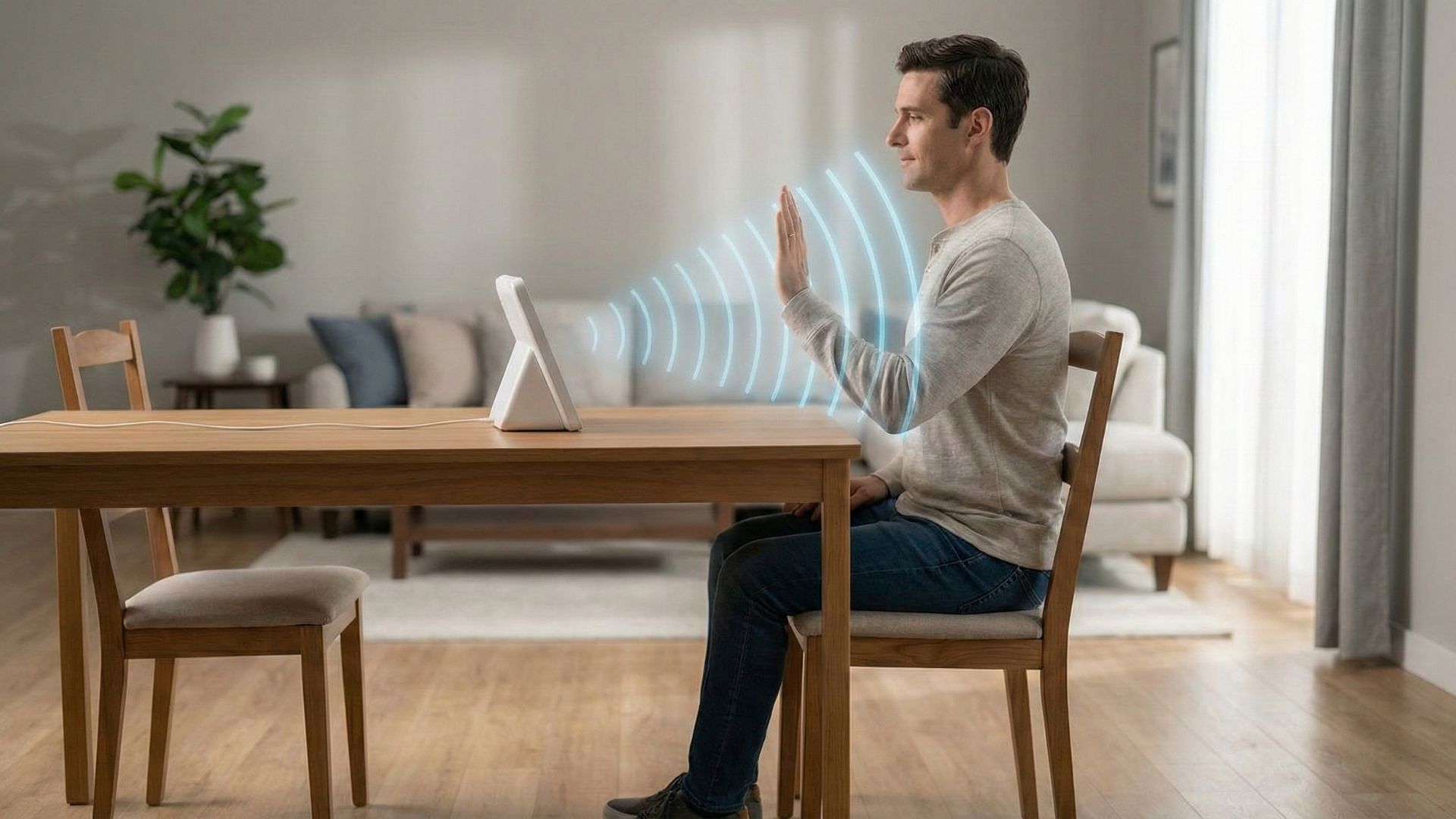
Google’s Quiet Bet on Radar-Based Blood Pressure Monitoring
Blood pressure is one of the most important vital signs in human health, yet its measurement has remained stubbornly stuck in the past. Traditional cuff-based sphygmomanometers, whether manual or digital, require direct contact with the arm and only provide snapshots.
They lack continuous insight into cardiovascular dynamics throughout the day. Wearables and contactless camera-based approaches can infer heart rate and pulse, but continuous, cuff-free, contact-free blood pressure measurement with medical-grade reliability is still an open challenge.
Against this backdrop, radar-based blood pressure monitoring is emerging as a promising alternative. Radar systems emit electromagnetic waves toward the body and analyze the pattern of reflected signals to capture tiny motion patterns caused by blood pulsing through arteries under the skin.
Because radar can detect sub-millimeter chest and limb micro-motions without direct contact, it allows for truly passive and non-contact measurement of cardiovascular signatures, including pulse wave timing and motion features that correlate with blood pressure.
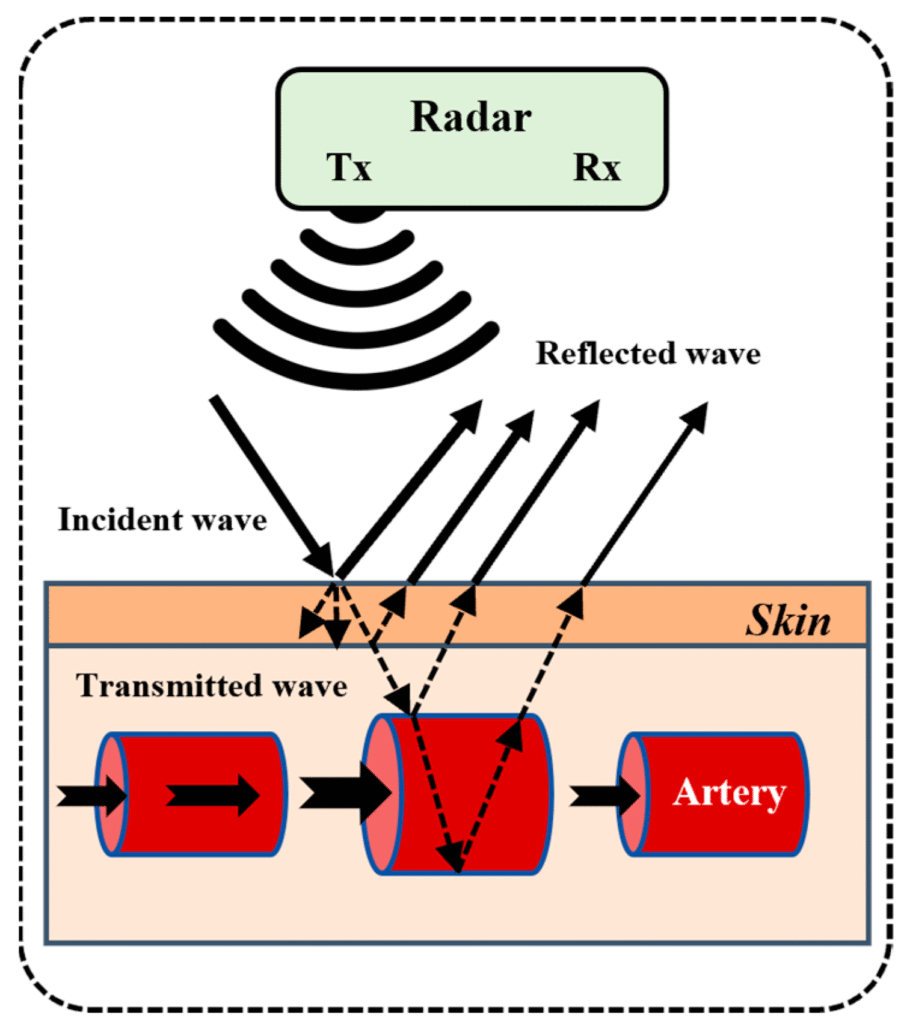
Research in this area is advancing rapidly, showing that radar can be combined with deep learning to extract blood pressure estimates from these subtle reflections, while preserving user comfort and privacy in everyday settings.
Academic and industry work in this field has explored the potential of radar signals — from Doppler radar schemes and millimeter-wave sensors to advanced neural nets that interpret radar reflections for blood pressure estimation. These studies highlight both the promise of radar techniques and the inherent difficulties, such as isolating weak physiological signals from noise and motion artifacts.
A number of companies and research partnerships are already exploring related technologies. For example, CardieX Ltd and others are developing wearable and non-invasive sensor platforms that seek to capture vital signs including blood pressure, even if not purely contactless in every case. Valencell is another player focused on integrating comprehensive biometric sensing (including blood pressure estimates) into wearables that are used by major consumer brands.
In addition to wearable innovators, collaborations such as CardieX with Infineon show that radar and millimeter-wave chipsets are being integrated into broader sensor toolkits aimed at bringing non-invasive cardiovascular monitoring into tomorrow’s devices.
Within this growing landscape of radar and non-contact health sensing, Google’s involvement stands out because it signals interest from a major consumer-tech ecosystem player whose core business is not medical devices.
Google’s Radar-Based Blood Pressure Patent
Google’s patent application is targeting a practical deployment problem — how to make this technology work reliably in real-world, everyday environments.
The central challenge addressed by the patent is accurate, contactless blood pressure measurement without relying on wearable devices or cuffs, even when the user is sitting, lying down, or casually interacting with a device. Most existing solutions struggle when conditions are less than ideal. Slight body movement, posture changes, or inconsistent positioning can significantly reduce accuracy.
Radar can theoretically detect pulse waves traveling through arteries, but in practice, extracting clean signals from reflections that bounce off clothing, skin, furniture, and surrounding objects is extremely difficult. The pulse pressure wave is tiny compared to all the other motion happening in a room.
Google’s patent focuses on this specific bottleneck.
How Google is trying to solve this bottleneck?
At a high level, Google’s approach can be understood as watching blood move without touching the body.
The system uses a radar sensor that emits radio frequency (RF) signals into the surrounding environment. These signals bounce off the user’s body and return to the sensor carrying subtle information about motion. Even though the movements caused by blood flowing through arteries are extremely small, radar is sensitive enough to detect them under controlled conditions.
The key insight is to observe the pulse wave at two different locations on the body.
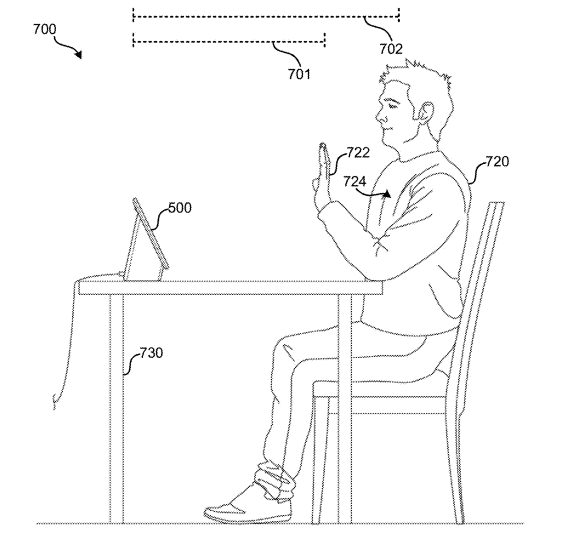
When the heart pumps, it sends a pressure wave through the arteries. This wave does not appear everywhere at once — it travels outward over time. If radar can detect when the wave reaches a point near the chest and then when it reaches a point further away, such as the hand or arm, the system can calculate how long the wave took to travel between those points.
This time difference is known as pulse transit time. Medical research has shown a strong relationship between pulse transit time and blood pressure. Generally, when blood pressure is higher, arteries are stiffer and the pulse wave travels faster.
In simple terms, the process works like this:
- The radar emits signals toward the user and receives reflections.
- The system analyzes reflections from one region of the body, such as near the chest, and identifies the moment a pulse wave appears.
- It then analyzes reflections from another region, such as an arm or hand, and identifies when the same pulse wave arrives there.
- By calculating the time difference between these two events, the system estimates pulse transit time.
- Using this timing information — optionally combined with machine-learning models and calibration data — the system estimates blood pressure.
In some variations described in the patent, machine learning models are used to interpret the reflected radar signals directly. These models are trained to recognize patterns associated with different blood pressure levels, allowing the system to improve accuracy over time and adapt to individual users.
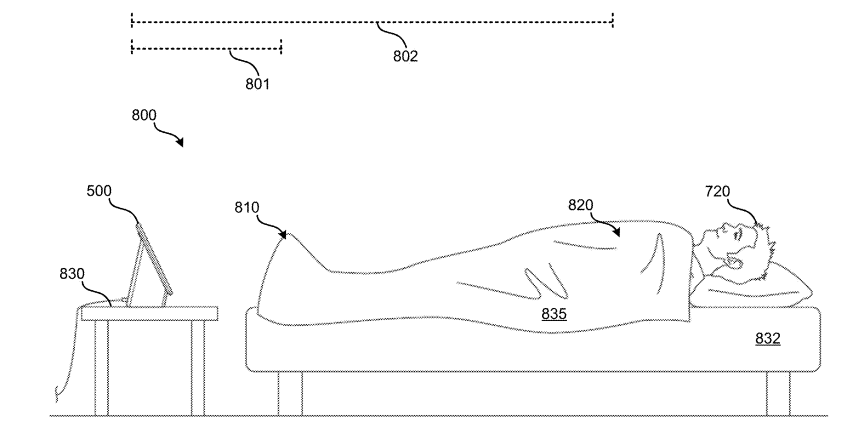
Importantly, the system does not require the user to wear anything. The radar sensor can be embedded in a nearby device, such as a display or bedside unit, operating passively in the background.
Why is Google Interested?
Google’s involvement in radar-based blood pressure monitoring raises an obvious question:
Is Google planning to launch a medical device?
The patent suggests something more subtle.
Rather than describing a single standalone product, the patent outlines a flexible system architecture. Radar sensors, processing modules, cloud connectivity, and optional calibration workflows are all designed to operate as part of a broader ecosystem. This strongly indicates that Google is exploring blood pressure sensing as a capability, not just a product.
This approach aligns with Google’s past investments in radar through its Soli project, which focused on gesture detection and motion sensing for consumer devices. Radar has already proven useful for detecting presence, movement, sleep patterns, and breathing — blood pressure monitoring would be a natural extension of that sensing stack.
There are several plausible paths Google could take:
One option is embedding the technology into its own hardware, such as smart displays, home health hubs, or future ambient computing devices. Blood pressure could be monitored passively during daily routines, similar to how sleep or activity data is collected today.
Another possibility is that Google positions itself as a technology provider, offering radar-based sensing algorithms and platforms that can be licensed or integrated by healthcare partners, device manufacturers, or wellness companies.
A third path involves health data services. Google’s strength lies in large-scale data processing, machine learning, and cloud infrastructure. Radar-derived blood pressure data could be analyzed longitudinally to detect trends, anomalies, or early warning signs — without requiring users to actively measure anything.
What stands out is that Google is not framing this as a replacement for doctors or clinical diagnostics. Instead, it appears focused on continuous, low-friction monitoring, which complements traditional healthcare rather than competing with it.
Conclusion
Radar-based blood pressure monitoring is still an emerging technology. It is not yet ready to replace cuffs in clinics or provide definitive medical diagnoses on its own. However, its potential lies elsewhere — in making cardiovascular monitoring more frequent, more passive, and more accessible.
Google’s patent highlights an important shift in thinking. Blood pressure does not need to be something measured occasionally with deliberate effort. With the right sensing technology, it can become part of the ambient background of daily life.
What makes this development notable is not just the technology itself, but who is working on it. When a company like Google invests in radar-based blood pressure research, it signals that health monitoring is moving beyond specialized medical devices and into the realm of everyday computing environments.
If successful, this approach could help detect problems earlier, reduce friction in long-term health tracking, and quietly redefine how people understand their own cardiovascular health — without them ever rolling up their sleeves.