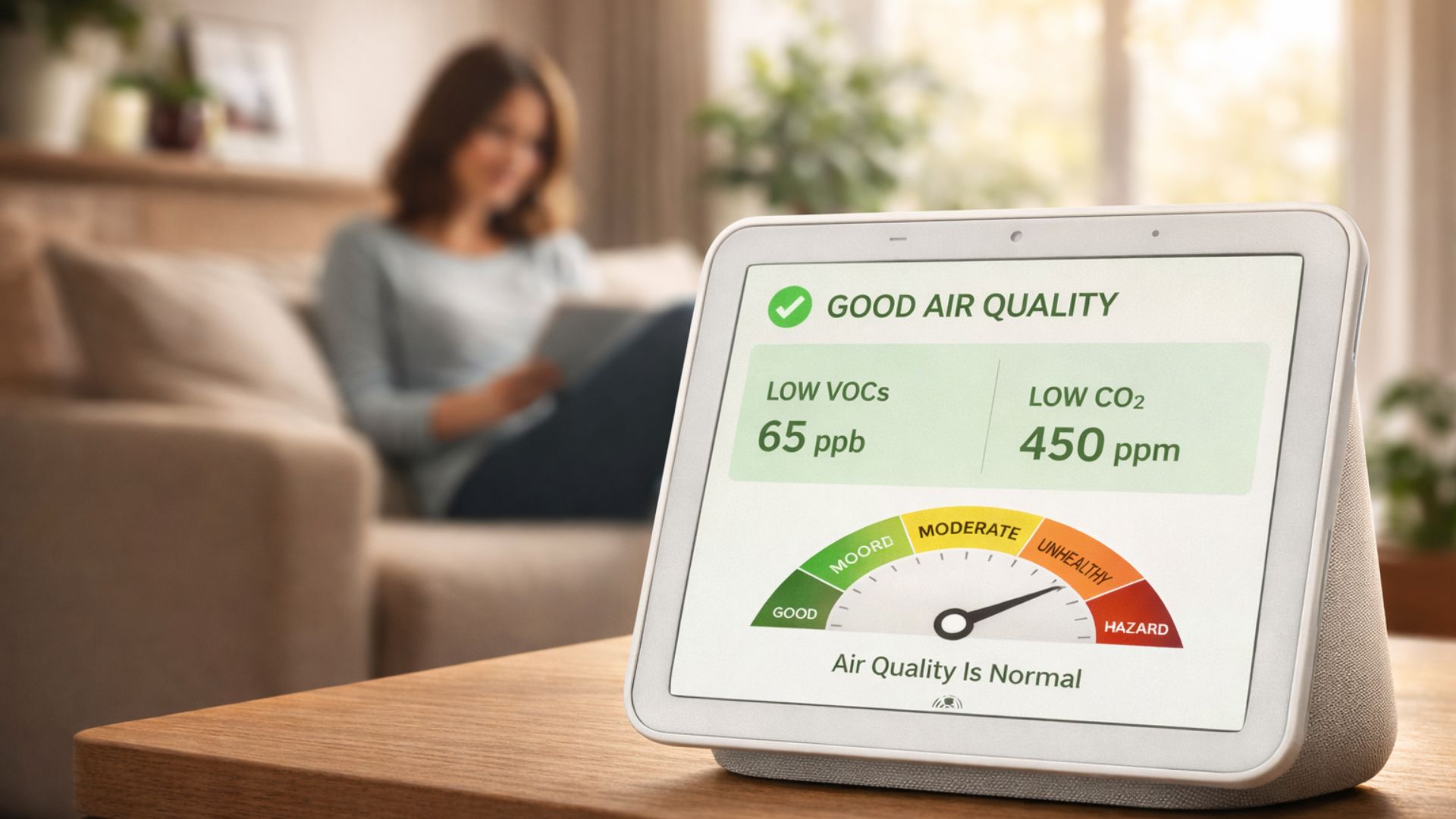
Google Smart Home System to Tackle Bad Indoor Air Quality
Indoor air pollution is one of the most serious environmental health issues, yet it remains largely invisible. Unlike outdoor pollution, it develops quietly inside homes, without people knowing. Despite receiving far less attention, polluted indoor air is linked to an estimated 3.8 million premature deaths every year, placing it among the leading global health threats.
A significant share of this burden comes from household air pollution, which contributes to millions of deaths annually and a substantial portion of the global disease burden as per WHO. Long-term exposure can lead to heart disease, stroke, and chronic respiratory conditions, while children face a particularly high risk of respiratory infections.
The impact extends beyond mortality. In a single year, tens of millions of healthy life years are lost due to illnesses linked to poor indoor air, reflecting prolonged suffering rather than sudden disease.
Women and children are exposed for longer periods indoors, especially during cooking and daily household activities, making them more vulnerable to both short-term and long-term health consequences.
Together, these patterns reveal a troubling reality for many people. The most harmful air they breathe is not always outside, but can be found inside their own homes too.
Why Indoor Air Often Goes Unnoticed
For most people, pollution is something that exists outside their homes. It is associated with traffic, factories, construction sites, and crowded cities. Very few people think about the quality of air inside their own living rooms and bedrooms.
Yet modern homes are tightly sealed spaces filled with invisible chemicals released by furniture, paint, cleaning products, plastics, and cooking fumes. These substances do not disappear quickly. They remain in the air and are inhaled every day, often for years.
The core issue is that indoor air pollution is largely invisible. Further, general people lack awareness, accessible information, and measurement tools. Moreover, public health messaging hasn’t effectively communicated the risks in ways that align with how people perceive and understand air quality in their daily lives.
Luckily, companies are trying to solve this problem. And surprisingly, Google is also working on it.
Google Comes with A Solution
One of the Google patents is built around this problem.
At the center of this invention is the idea that indoor air should be treated as a medical signal rather than just a comfort factor.
Instead of using air sensors only to control temperature or humidity, the system described in the patent measures chemicals such as volatile organic compounds, carbon dioxide, and other indicators, and then translates them into health-related assessments.
In simple terms, the home is designed to function like a diagnostic tool. Just as a smartwatch tracks heart rate or sleep patterns, this system tracks the chemical environment around a person and evaluates whether it may be affecting their well-being. This represents a shift in how smart homes are imagined: from convenience tools to health-support systems.
Moving Beyond Simple Air Quality Alerts
Unlike basic air monitors that trigger alarms when pollution crosses a fixed limit, this system relies on multiple sources of information to understand what is really happening inside a building.
It combines data from air-quality sensors, motion detectors, occupancy monitors, pressure sensors, weather services, and external pollution databases. All of this information is processed together to create context.
For example, rising pollution levels in an empty room mean something different from rising levels while someone is cooking.
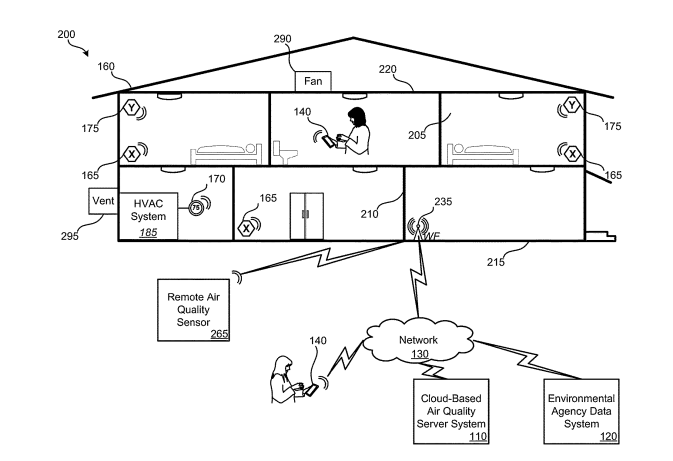
Higher carbon dioxide at night may indicate poor ventilation, while the same reading during a gathering may be normal. By analyzing patterns rather than isolated numbers, the system tries to reduce false warnings and provide more reliable feedback.
Understanding the Source of Pollution
One of the most interesting aspects of the patent is its attempt to identify the cause of pollution instead of merely detecting it. Before generating a health assessment, the system checks whether someone is present in the room, whether the space is sealed, and whether chemical levels increased after human activity.
This allows it to estimate whether the pollution was produced indoors or entered from outside. If air quality worsens after a person enters a room, it may be linked to activities such as cleaning, cooking, or using certain products. If pollution rises without human presence, it may be related to outdoor conditions. This kind of reasoning moves the system closer to basic environmental understanding rather than simple measurement.
From Individual Homes to Neighborhood Awareness
The patent also extends this idea beyond individual homes. It describes networks in which nearby houses share air-quality information. When one building detects harmful air conditions, neighboring homes can be alerted and prepared in advance.
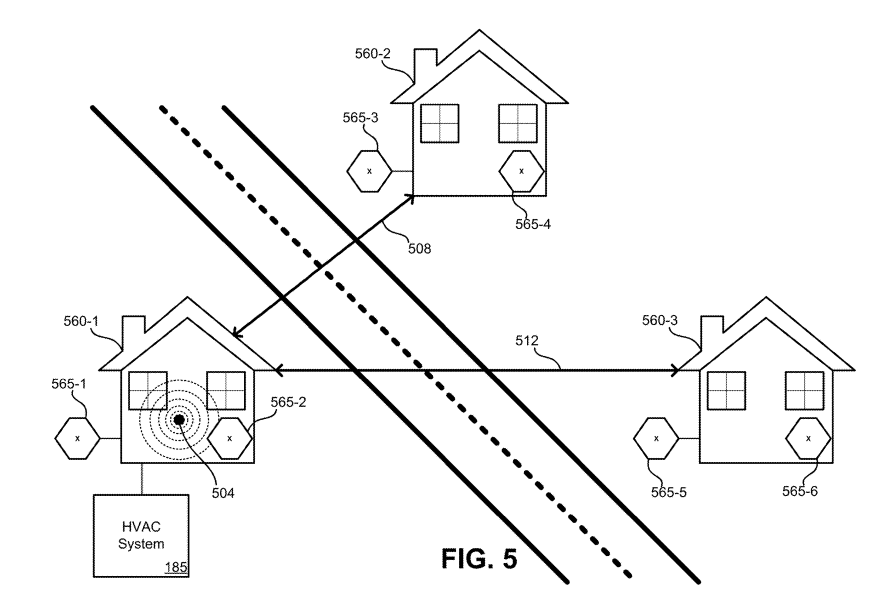
Ventilation systems may be adjusted, and sensors may switch to higher sensitivity. This creates a form of neighborhood-level environmental awareness. Instead of each home reacting alone, multiple buildings work together to respond to pollution events. In the long term, such networks could support community-level health monitoring and urban planning.
Collecting large amounts of sensor data is only useful if people can understand it. The patent therefore includes designs for user interfaces that present air-quality information in the form of clear health reports.
These reports list detected chemicals, risk levels, and possible symptoms in simple language. Rather than showing complex charts, the system translates measurements into practical insights. This makes the technology accessible to ordinary users and helps them make informed decisions about ventilation, cleaning habits, and home maintenance.
Automated Responses for Healthier Indoor Spaces
Another important feature of the system is its ability to act automatically. When unhealthy air is detected, it does not simply notify residents. It can activate ventilation systems, adjust heating and cooling units, recommend opening windows, and modify sensor behavior.
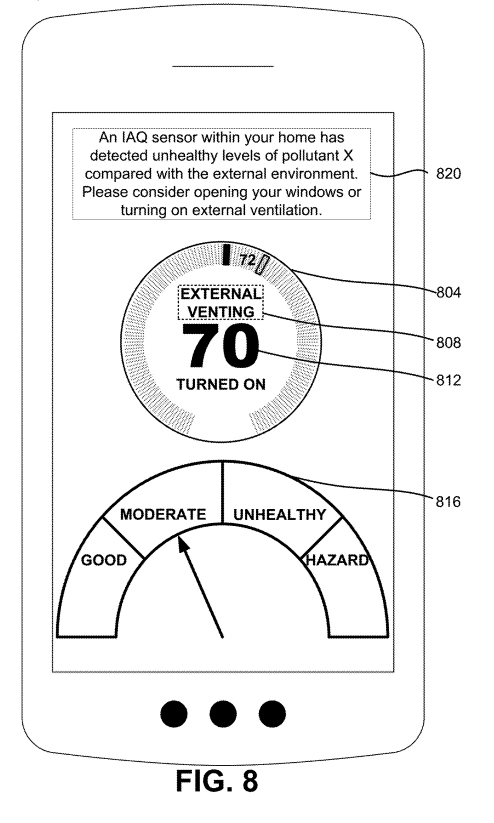
This creates a feedback loop in which the home continuously senses, analyzes, decides, and responds. Over time, such automation may reduce dependence on manual monitoring and make healthy indoor environments easier to maintain.
Much of this intelligence operates through cloud-based servers. Sensor data is transmitted to remote systems where it is analyzed, stored, and compared over long periods. This enables pattern recognition, machine learning improvements, and cross-home comparisons. It also allows the system to evolve as more data becomes available.
However, cloud processing raises questions about data ownership and privacy. While the patent focuses mainly on technical functionality, large-scale environmental monitoring inevitably involves sensitive personal information. These concerns will become more important as such systems move closer to real-world deployment.
Bridging the Gap Between Environment and Health
Behind the technical structure of this patent lies a simple human problem. Many people experience discomfort or health issues without knowing their cause. Symptoms such as tiredness, irritation, and sleep problems are often attributed to stress or lifestyle, while environmental factors are ignored.
Medical checkups rarely include detailed air-quality assessments, and homes are seldom evaluated as potential contributors to illness. This invention attempts to close that gap by linking environmental exposure with health analysis. It turns vague physical discomfort into measurable data and connects living conditions with medical awareness.
In a broader sense, this patent reflects a growing trend in digital health. Monitoring is moving away from hospitals and into everyday environments. First, health tracking focused on clinical equipment. Then it expanded to wearables and smartphones. Now, living spaces themselves are becoming part of the health ecosystem.
Air, light, temperature, noise, and chemical exposure are increasingly viewed as data points that influence well-being. This shift suggests that future medical records may include not only biological information but also environmental histories.