YouTube channel memberships are one of the most direct ways for creators to monetize their audience. Unlike ads, memberships offer recurring income, stronger fan relationships, and exclusive perks such as badges, members-only videos, and early access to content. For creators with a loyal subscriber base, memberships can become a stable and predictable revenue stream.
Most YouTube creators already know this. The value of memberships is not a secret. In fact, YouTube actively promotes memberships as a core monetization feature alongside ads, Super Chats, and merchandise.
Yet in practice, many creators do not mention memberships regularly in their videos. Sometimes this happens intentionally—creators may not want to interrupt content flow or appear overly promotional. In other cases, it is simply forgotten. During recording, editing, or uploading, the reminder never comes up. Over time, this leads to missed opportunities where viewers who might have joined never even hear about the option.
This is the gap Google’s YouTube-related patent aims to address. The patent describes a system that quietly assists creators by identifying missed opportunities to mention memberships and offering timely, contextual suggestions to fix that.
The Challenge the Patent is Addressing
The patent focuses on a surprisingly simple but costly problem:
creators often fail to promote channel memberships consistently, even when it would clearly benefit them.
From YouTube’s perspective, this problem has multiple layers:
- Creators upload videos without mentioning memberships
- Viewers are unaware that memberships exist
- Potential recurring revenue is lost
- Creators rely heavily on ads instead of diversified income
The patent explains that this issue is not caused by lack of knowledge, but by timing and attention. Creators are focused on content creation, not monetization optimization. The platform, meanwhile, has access to data that creators do not actively track—such as how often memberships are mentioned across recent uploads.
What makes this challenge important is scale. Even small improvements in membership promotion across millions of creators can significantly increase creator earnings and platform revenue.
In many cases, the patent treats this as a “missed opportunity” problem rather than a technical failure. The system is designed to notice what did not happen—for example, when memberships were not mentioned in the last few videos—and act on that insight.
Google’s Solution is AI-Driven Suggestions
The solution described in the patent relies on artificial intelligence, specifically a large language model (LLM), to assist creators at the right moment.
Step 1: Monitoring Channel and Video Activity
When a creator uploads a video or manages their channel, the system checks whether the channel offers memberships and reviews recent content activity. This includes analyzing whether memberships were mentioned in recent videos and how frequently monetization features are referenced.
This monitoring happens automatically in the background and does not require any action from the creator .
Step 2: Detecting a Missed Opportunity
If the system finds that a creator has not mentioned memberships in several recent videos, it flags this as a missed monetization opportunity. The key detail is that the system is not reacting to mistakes, but to patterns.
For example:
- Memberships enabled
- Multiple recent uploads
- No recent membership mentions
This pattern triggers the next step.
Step 3: Generating an AI-Based Prompt
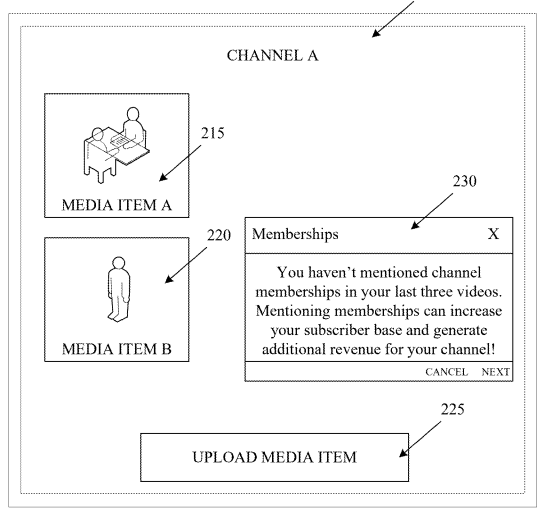
Once a missed opportunity is detected, the system generates a prompt using a large language model. Instead of showing analytics charts or generic reminders, the prompt uses clear, natural language.
An example shown in the patent reads:
“You haven’t mentioned channel memberships in your last three videos. Mentioning memberships can increase your subscriber base and generate additional revenue for your channel.”
The wording is intentional. It explains why the suggestion matters, not just what to do. This makes the recommendation easier to accept and act on.
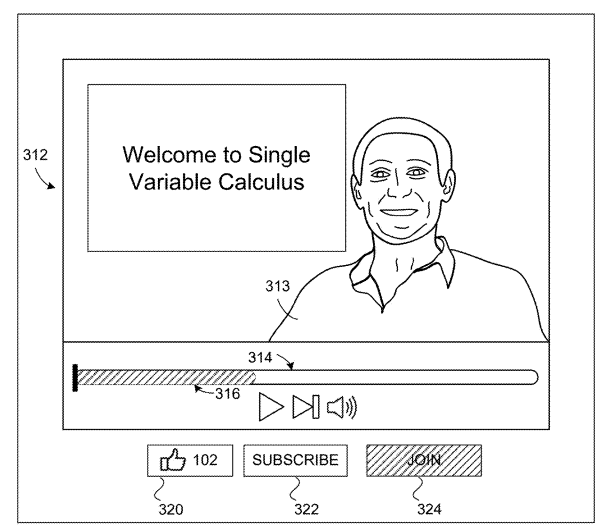
Step 4: AI Goes Beyond Simple Reminders
The patent allows the AI system to do more than issue reminders. The LLM can also generate suggestions such as:
- Example lines a creator could say in a video
- Guidance on where the mention might fit naturally
- Recommendations tailored to the type of content
This step is outlined in the patent’s workflow diagram, where the system generates an input prompt, sends it to the LLM, receives structured output, and then performs an action based on that output.
Step 5: Creator Control Remains Central
Importantly, the creator is never forced to act. The prompt can be dismissed, ignored, or accepted. The system is designed as guidance, not enforcement.
This design choice reflects an understanding of creator behavior. Overly aggressive monetization tools often frustrate creators, while optional and contextual guidance is more likely to be used.
Google AI Prowess to YouTube Creator Welfare
At a broader level, this patent shows Google’s intention to make YouTube a more active partner in creator success. Instead of leaving creators to interpret analytics and monetization strategies on their own, the platform is moving toward intelligent assistance.
The goal is not just higher revenue, but better creator retention. Creators who earn more, with less effort and confusion, are more likely to stay on the platform long term.
This patent is another signal of a shift in how AI is used for YouTube creators welfare. Another Google patent talking about a new tool for helping YouTube creators find more members.
By using AI to detect missed opportunities and offer timely, contextual suggestions, YouTube positions itself as a monetization co-pilot rather than just a hosting platform. The system respects creator control while nudging them toward better outcomes.