When NFTs went mainstream, carmakers were quick to join. Many brands used blockchain as another canvas for storytelling.
Automakers such as Renault, Lamborghini, Porsche, McLaren, and others launched limited-edition NFT artworks or digital memorabilia. These projects generally aimed to:
- deepen the emotional connection between fans and brand
- create digital collectibles linked to special models or motorsport heritage
- Experiment with community engagement and loyalty programs
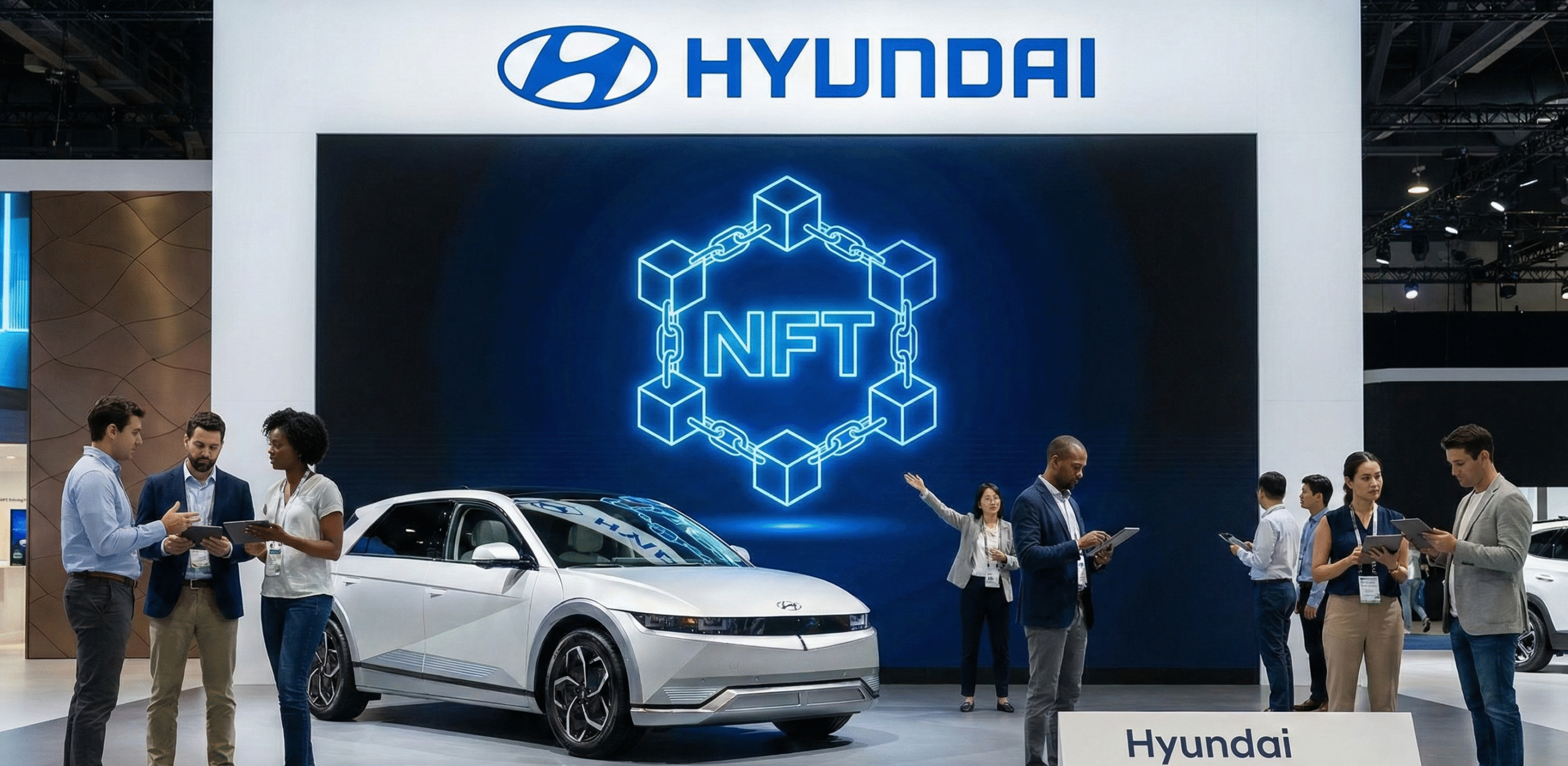
Hyundai was one of the automakers to launch NFTs.
In 2022, Hyundai introduced Metamobility Universe. Within this universe, the automaker released multiple NFTs, some with collaboration.
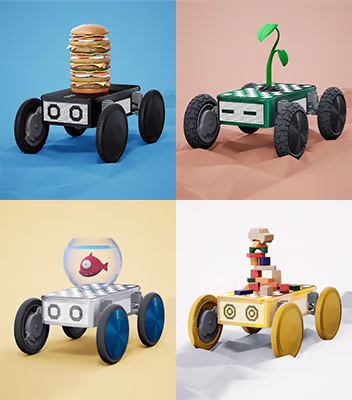
In May, it launched ModEd (Mobile Eccentric Droid), its first official Metamobility NFT.
In most cases, NFTs here were like posters or commemorative coins. They were interesting, scarce, symbolic, but not functionally connected to the vehicle itself. They worked mainly as a marketing amplifier. Useful for brand buzz, not essential to mobility.
Blockchain, including NFTs, has multiple use cases, and companies seem to understand them lately.
Hyundai to use NFTs for an actual Use Case
Hyundai’s new patent work signals a different ambition. Instead of treating NFTs as collectibles, it treats them as utility.
Cars are increasingly shared and personalized, but proving who is allowed to use a car, under what conditions, and with what rights is still hard to manage.
Keys can be copied, phones can be borrowed, insurance rules are rigid, and verifying multiple users is bureaucratic. Digital keys exist, but they are limited to a manufacturer’s ecosystem and tied only to the main owner.
Hyundai’s concept uses NFTs to represent:
- the car itself
- individual users of that car
- the permissions and rights tied to those users
There is usually a “main NFT” linked to the vehicle, and “derivative NFTs” connected to family members, temporary drivers, renters, or other authorized users.
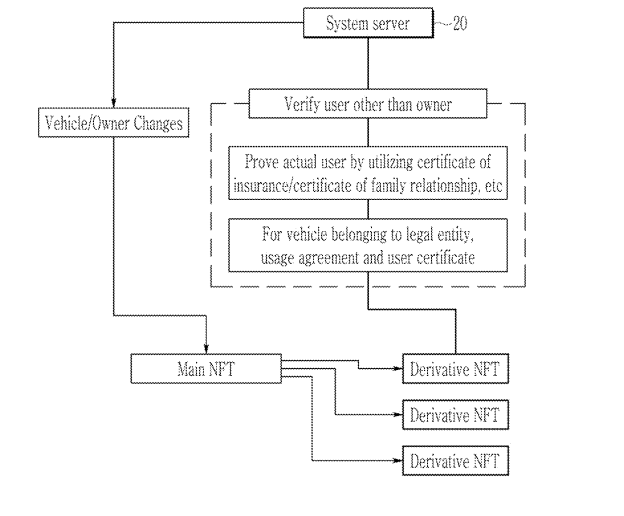
Each NFT becomes a cryptographic credential showing not only identity but also what a person is legally or practically allowed to do with the vehicle.
This matters because it moves NFTs from symbolism to service.
On top of access permissions, Hyundai also connects these tokens to digital identities in virtual environments.
A car and driver can exist as persistent characters or avatars across digital platforms, games, or virtual spaces. While that part is more speculative, it shows Hyundai thinking beyond metal and rubber toward vehicles as digital beings in people’s wider digital lives.
Practical uses without going deep into the technical side
The mechanics of how blockchain works sit under the hood, and drivers do not need to care about cryptography to benefit from it. What matters is the practical picture.
A system like Hyundai’s could allow:
- parents to grant children limited use of a car
- car-sharing inside families or organizations without paperwork
- rental companies to issue temporary driving rights instantly
- insurance conditions to link directly to verified users
- remote revocation or modification of permissions
Instead of managing bundles of passwords, contracts, and physical keys, NFTs act as unified digital passes anchored to identity. This provides clarity on who is responsible for a car at any moment, which becomes even more important as self-driving features, subscriptions, and pay-per-use models grow.
This invention seems like a preparation for the future.
Hyundai is not alone in moving toward real blockchain use cases
Other automakers have begun walking the same road.
Early blockchain consortia already explored vehicle identity on distributed ledgers, focusing on concepts such as:
- tamper-proof vehicle history
- digital maintenance records
- cryptographic titles and registration
- secure data exchange among insurers, authorities, and owners
More recently, some manufacturers have filed patents or launched pilots where NFTs are tied directly to vehicle identity, service records, software features, or digital twins. The common direction is clear: blockchain becomes less about collectibles and more about creating trustworthy, persistent records that survive app changes, software updates, or corporate boundaries.
So Hyundai does not stand alone as a pioneer, but it is among those trying to weave several strands together at once: ownership, permission, identity, and digital experience.
Drawbacks, hesitations, and public acceptance
Despite its promise, there are reasons for caution.
Legal systems are a hassle. Not all regions recognize blockchain tokens as valid proof of ownership or permission. Insurance companies and regulators would need systems that speak the same digital language. Without that, NFT credentials risk becoming clever technology with limited legal teeth.
User experience is another friction point. Managing wallets, private keys, and tokens is still unfamiliar to many people. Losing access to an NFT-linked credential could be more frustrating than losing a physical key.
There is also public perception. NFTs carry cultural baggage—from speculative bubbles to scams—which may make some consumers instinctively wary. Automakers adopting them for serious use will need to separate pragmatic blockchain infrastructure from the noisy world of speculative crypto trading.
There is also a counterpoint.
Consumers already accept digital payment tokens, mobile boarding passes, biometric authentication, and cloud-stored car keys. If NFT-backed systems appear not as “crypto products” but as simple, smooth features embedded in cars, acceptance can follow quietly and gradually.
Confidence will depend less on the word “NFT” and more on whether things simply work.