
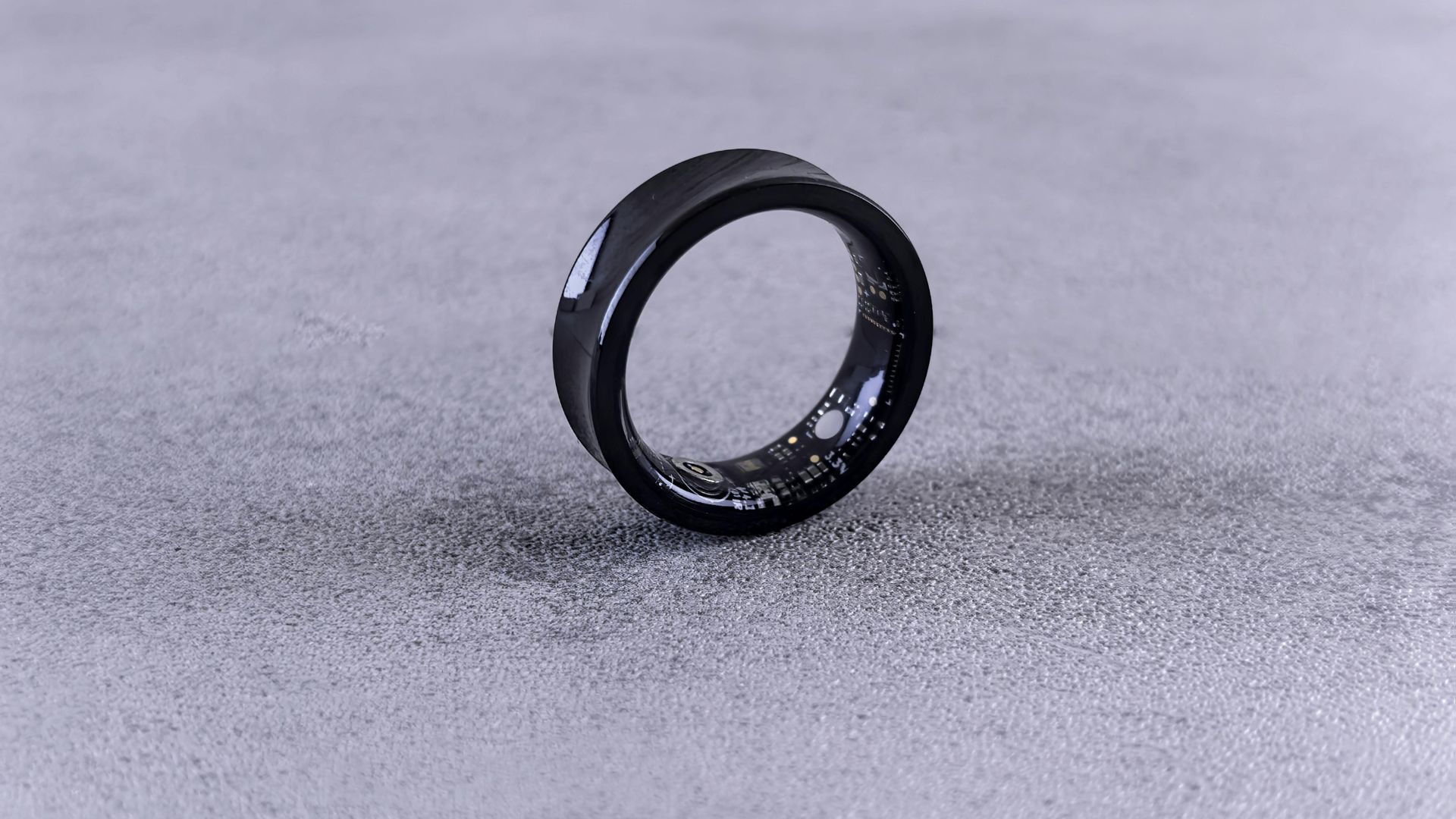
People like Galaxy Ring because it’s small, comfortable, and doesn’t feel like you are wearing anything. No bulky screens. No constant notifications. Just quiet, always-on health tracking wrapped around your finger.
It has around a week of battery life, so it’s hassle-free. Also, it doesn’t require a monthly subscription for its core features, unlike Oura.
On the downside, its workout tracking isn’t as deep as a good Garmin or smartwatch, and you often need to start activities from your phone rather than the ring. Some people also mention cosmetic wear, like scratches and a bit of battery decline over time.
Many reviewers frame it as excellent for passive health and sleep tracking, but not a full replacement for a serious fitness watch.
Smart rings are still a niche, but the market is growing fast, with estimates putting 2025 revenue in the few‑hundred‑million‑dollar range and expectations of it multiplying several times by 2030–2035.
Samsung reportedly boosted Galaxy Ring production to about a million units because early demand was higher than expected, which puts it in the same ballpark as what Oura has sold over several years if Samsung sells through that stock.
But as smart rings become more popular, their flaws are also becoming harder to ignore.
Broadly speaking, users tend to complain about three things:
- Fit and comfort issues, especially when fingers swell or shrink during the day
- Inconsistent sensor readings caused by poor skin contact
- Durability problems, such as internal components being stressed during daily wear
The Real Challenge: A Finger Is Not a Static Surface
On paper, measuring health data from a finger sounds ideal. Fingers have strong blood flow and are great for sensors like heart rate, temperature, and even ECG. In real life, though, fingers are constantly changing.
They expand when it’s hot. They shrink in cold weather. They flex, twist, and press against objects all day. That creates a nightmare for sensor accuracy.
Many user reviews of existing smart rings mention this exact issue. On forums like Reddit and in long-term reviews on tech sites such as The Verge and Android Authority, users often say things like:
- “The ring feels fine, but sleep data is hit or miss.”
- “Heart rate tracking is great one day and completely off the next.”
- “If the ring rotates even slightly, readings drop.”
The common thread is sensor contact. If the sensors aren’t pressed evenly and consistently against the skin, the data becomes unreliable. And unlike a smartwatch, you can’t just tighten a ring whenever you want—it has to fit just right all the time.
This is the specific problem Samsung is tackling.
Samsung’s Approach: Make the Ring Adapt to You
According to Samsung’s patent application, it is rethinking the physical structure of the ring.
As per the patent, the ring is built with a strong outer frame that protects the device, but the real innovation sits on the inside. Inside the ring, Samsung uses a flexible, segmented inner structure made up of multiple curved parts rather than one solid circle. These inner segments can bend slightly inward and outward, allowing the ring to adjust when your finger swells, shrinks, or moves throughout the day.
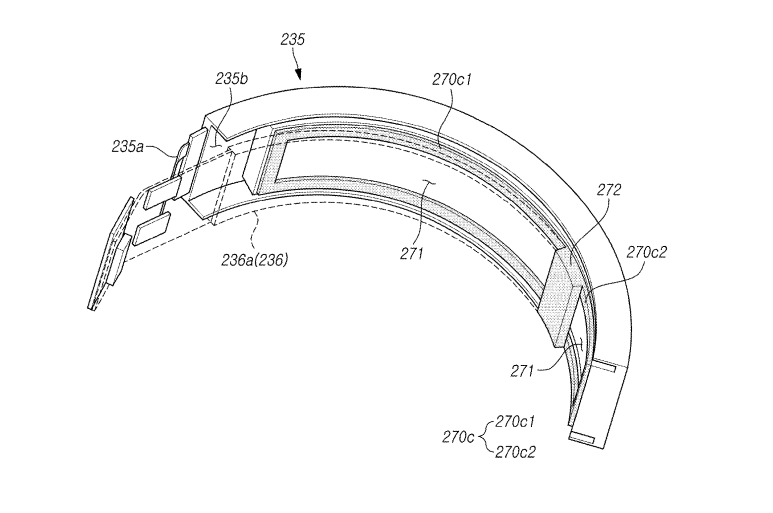
The health sensors—such as heart rate, ECG, temperature, and motion sensors—are mounted on this flexible inner structure instead of being fixed directly to the hard shell.
As a result, the sensors are gently but constantly pressed against the skin, even if the ring rotates or your finger bends. This design prevents tiny gaps from forming between the sensors and the skin, which is a common reason smart rings produce inconsistent or missing data.
In simple terms, the outer ring stays firm and durable, while the inside behaves like a spring or cushion that keeps the sensors in contact at all times. By solving the problem mechanically rather than relying only on software, Samsung aims to deliver more stable, accurate health tracking in everyday use.
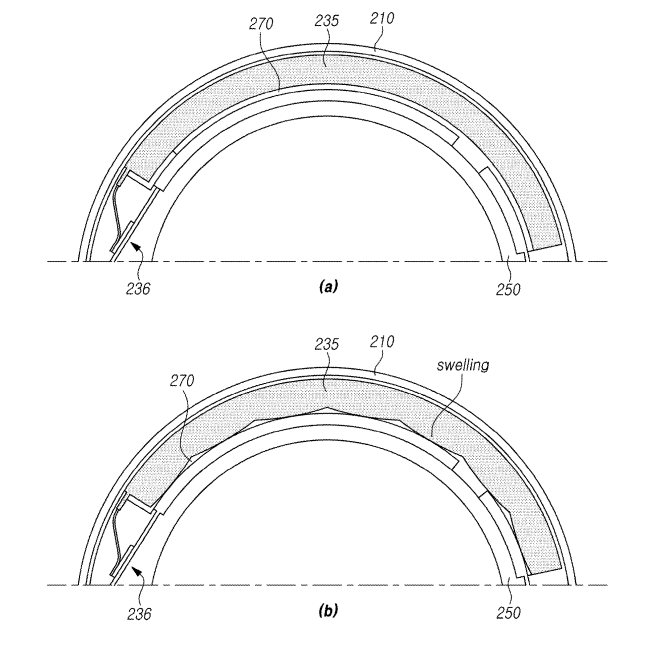
This design directly targets the root cause of inconsistent readings: uneven pressure and sensor lift-off.
A Small Ring, A Big Step Forward
Smart rings are already impressive for their size. But their biggest weakness has always been the human finger itself—unpredictable, flexible, and constantly changing.
Samsung’s smart ring patent shows a clear understanding of that reality. Instead of fighting the problem with software alone, the company is addressing it at the mechanical level. If this design makes it into a final product, it could quietly solve one of the most frustrating issues smart ring users talk about today.