
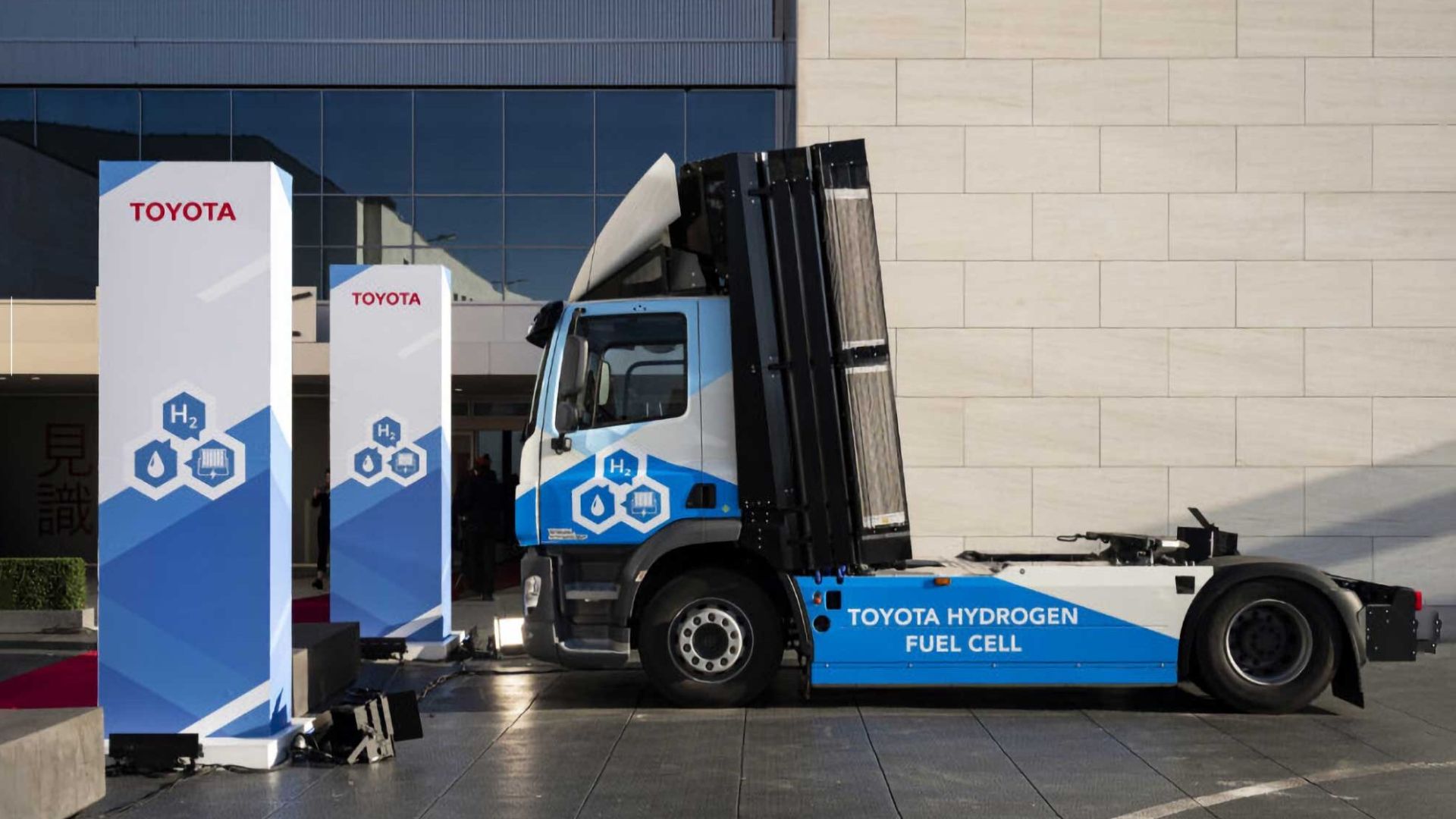
Modern hydrogen-powered vehicles, including those developed by Toyota and other automakers, rarely rely on a single large hydrogen tank. Instead, they use multiple high-pressure hydrogen tanks arranged together within the vehicle body. This design choice may seem unnecessary at first, but it is driven by several practical engineering reasons.
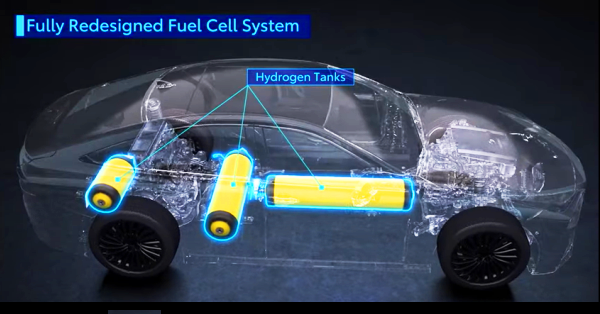
Hydrogen must be stored at extremely high pressure to provide a usable driving range.
A single large tank capable of holding enough hydrogen would be bulky, difficult to package within a vehicle, and harder to protect during crashes. By dividing storage into several smaller tanks, manufacturers gain greater design flexibility. It allows tanks to be placed under the floor, behind the seats, or along the vehicle frame. This improves weight distribution, safety performance, and structural integrity.
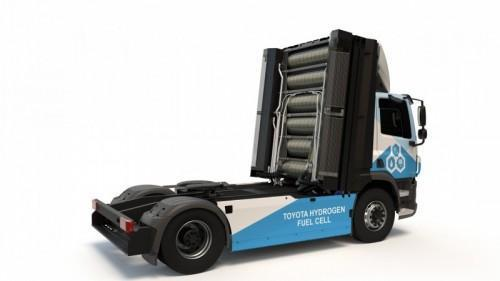
Multiple tanks also improve scalability. Commercial vehicles such as trucks may need more hydrogen than passenger cars, and adding tanks becomes easier than redesigning one oversized container. From a manufacturing perspective, standardized tank units can be reused across different vehicle models.
However, while multiple tanks solve packaging and safety challenges, they introduce a less visible but serious problem: how to refill them efficiently and safely. This is the exact issue Toyota is trying to solve.
The Underlying Challenge: Refueling Multiple Hydrogen Tanks
Accurately hydrogen refueling when multiple tanks are connected through shared piping is a major operational challenge.
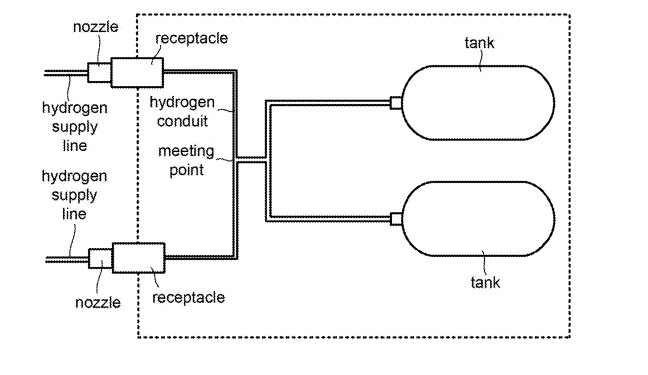
In a typical multi-tank system, hydrogen flows from a refueling nozzle into a conduit that branches out to two or more tanks. These tanks may have slightly different internal conditions due to temperature, pressure history, or volume. When hydrogen is supplied, pressure does not always rise evenly across all tanks. Some tanks may fill faster, while others lag.
The problem becomes more serious because hydrogen refueling must be done within strict safety limits.
Overfilling a tank or allowing excessive temperature rise can create safety risks. To avoid this, conventional systems often take a conservative approach, slowing down the filling process or limiting flow. While safe, this leads to longer refueling times, which hurts the user experience and makes hydrogen vehicles less competitive.
Another difficulty is that the refueling station may not know how many tanks are actually connected. A system designed for a single tank behaves differently from one connected to two or more tanks. Without reliable knowledge of the tank configuration, the station cannot choose the best filling method.
This challenge matters for several reasons.
- For automakers like Toyota, inefficient refueling undermines one of hydrogen’s key advantages: fast refueling compared to battery charging.
- For station operators, poor filling control increases system complexity and operating costs.
- For the public, slow or inconsistent refueling reduces confidence in hydrogen as a practical alternative to gasoline.
Since Toyota is both an automaker and a station operator, it is too important for the company to fix this.
The solution: a smarter way to understand the tank system
The solution proposed in Toyota’s patent application is a hydrogen filling method that determines the tank configuration automatically and then adapts the filling control accordingly.
So, instead of assuming how many tanks are connected, the system figures it out during the refueling process itself. This is done using a sequence of controlled steps referred to as pre-filling operations.
First, the system performs a very small initial hydrogen supply, known as “zeroth pre-filling.” This is not intended to fill the tank but to observe how pressure changes in the system. The pressure is measured at specific points in the hydrogen supply line.
Next, the system carries out the first and second pre-filling stages. Each stage introduces hydrogen in a controlled manner and records how pressure responds after each injection. The system not only looks at the final pressure value, but also at how pressure increases, stabilizes, or equalizes over time.
These pressure response patterns are then analyzed.
A single-tank system behaves differently from a multi-tank system because multiple tanks absorb hydrogen in a distributed way. By comparing measured pressure values before and after pre-filling, the system determines whether it is dealing with one tank or multiple tanks.
Once it determines that, the refueling controller selects the appropriate filling strategy. If only one tank is present, it uses a filling control optimized for that scenario. If multiple tanks are detected, it switches to a control method designed to manage branched hydrogen flow safely and efficiently.
Importantly, this entire process happens automatically. No manual input from the driver is required, and no prior knowledge of the vehicle’s internal tank layout is needed. The system uses existing pressure sensors and valves already present in the hydrogen refueling infrastructure.
In simple terms, the refueling station learns about the vehicle by observing how it reacts to small amounts of hydrogen, and then fills it in the safest and fastest possible way.
Existing approaches and what makes this patent different
Pressure-based hydrogen filling is not new. Existing systems already monitor pressure and temperature to prevent unsafe conditions. Pre-filling steps are also known and are often used to stabilize conditions before full refueling begins.
However, the key difference highlighted in this patent lies in how those measurements are used.
In conventional systems, pressure data is primarily used for control to regulate flow rates and prevent exceeding limits. The system assumes a fixed tank configuration and follows a predefined filling profile. If multiple tanks are present, the profile is usually conservative to account for uncertainty.
Toyota’s approach adds a diagnostic layer before control. The system does not merely regulate hydrogen flow; it actively determines the structure of the connected tank system. This distinction is critical.
Another important difference is that the patent does not rely on vehicle-station communication to identify the tank layout. There is no need for the vehicle to transmit configuration data. The system infers everything from physical behavior observed during refueling.
This makes the solution more robust and easier to deploy across different vehicle models and generations. It also reduces dependency on standardized communication protocols, which can slow industry adoption.
In essence, earlier solutions focused on managing hydrogen safely under uncertainty. This patent reduces uncertainty itself. The shift from assumption-based control to behavior-based identification represents the core novelty of the application.
Why would Toyota want this implemented quickly?
Toyota has long positioned hydrogen as a key part of its long-term mobility strategy. For that strategy to succeed, hydrogen refueling must be not only safe, but also simple, fast, and reliable.
This patent addresses one of the most practical obstacles to that goal. Multi-tank vehicles are becoming more common, especially in commercial and heavy-duty applications. Without smarter filling logic, these vehicles risk slower refueling times and higher infrastructure costs.
By enabling refueling systems to automatically understand tank configurations, Toyota’s method improves efficiency without requiring new hardware or complex integration. It enhances safety, shortens refueling time, and improves the user experience. All these factors can directly affect public acceptance of hydrogen vehicles.
For Toyota, implementing this solution quickly would strengthen the competitiveness of its hydrogen offerings, support broader infrastructure compatibility, and remove a subtle but important barrier to hydrogen adoption. In a market where usability matters as much as technology, that advantage could prove decisive.