
YouTube is one of the world’s biggest user-generated content platforms, and here’s the thing—it’s actually pretty generous with its creators. The platform shares about 55% of its revenue with content makers, which works out to roughly $30 billion from YouTube’s $54 billion in annual revenue.
Beyond the usual ad revenue split, YouTube also offers paid memberships where subscribers can access exclusive content from their favorite creators. Think of it like a mainstream version of OnlyFans. But here’s where it gets interesting: despite this potentially lucrative feature, YouTube’s membership numbers are struggling.
YouTube has a classic creator problem: millions of subscribers, but only a tiny slice ever pays for memberships. It’s like playing a stadium show and trying to spot who might actually buy the backstage pass. You can shout to everyone, but that’s noisy and often annoying.
You can guess, but guessing is expensive. And because of privacy rules, creators can’t just dig through user data to find “likely buyers.” So how do you make smarter membership pitches without creeping people out?
Google’s new patent sketches a surprisingly neat answer: a behind-the-scenes system that quietly studies how fans behave on a channel, ranks them by engagement, and then recommends the best membership prospects.
And the best part, it doesn’t expose anyone’s personal details.
A feature to talent scout for your superfans.
Millions Free Subscribers but only Thousands Paid Members
If you’ve ever looked at a YouTube channel with a million subscribers and wondered why only a few thousand pay for membership perks, you’ve seen the gap. The jump from “I like your videos” to “I’ll pay monthly” isn’t automatic.
On platforms like Patreon, Substack, or Twitch, the best conversion often happens when creators reach the right people in the right way—folks who already show signs of deep interest.
But on YouTube, creators often don’t know who those people are. They’re stuck with broad calls to action (“Join to support the channel!”) that hit everyone, including viewers who barely watch.
It’s inefficient, and it can annoy casual fans. Meanwhile, platforms need to keep data private. So any solution has to be smart and privacy-safe.
From Subscribers to Paid Members
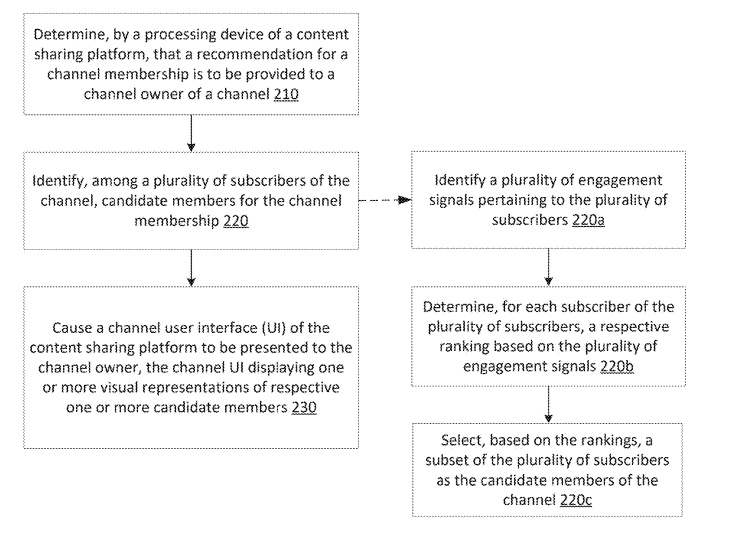
Google’s patent application proposes a system that listens to what viewers do, not what they say—and then quietly connects the dots. It looks at a range of engagement signals:
- How long someone has been subscribed
- How often they watch or like
- Whether they comment regularly
- If they’ve customized their profile or participated in community posts
Each of these actions gets a score, and not all actions are equal. Leaving thoughtful comments might count more than tapping “like.” Watching full videos might matter more than skimming shorts. Over time, the system builds a weighted engagement score for each subscriber.
When a subscriber’s score crosses a certain threshold, they’re added to a list of potential members.
Privacy by Design
Google understands privacy concerns; that’s why the system is designed so that it won’t show a creator any personal details about any suggested member. In their dashboard, they’d get an anonymized view—maybe avatars, icons, or a grouped list—representing the people most likely to convert.
The system also filters out edge cases. Suppose the metadata suggests a user is a poor fit, such as they already support too many channels, they’ve opted out of paid features, or they’ve previously declined membership. Those users can be automatically removed. The result is a curated, privacy-safe shortlist of “warm leads.”
Why this matters
For creators, this could be a game-changer. Instead of blasting membership pitches to everyone, they can tailor the message to the most engaged segment, like offering early access, custom emojis, behind-the-scenes videos, or members-only streams. That increases conversion without burning viewer goodwill.
For viewers, it means fewer generic prompts and more relevant offers. If you’re a heavy commenter who shows up to every premiere, seeing a personalized membership nudge makes sense. If you’re a casual watcher, you’re left alone. Win-win.
For YouTube, it aligns with where the creator economy is headed. Patreon, Substack, and Twitch all thrive on matching creators to their most dedicated fans. YouTube has the audience and the infrastructure; what it’s been missing is precision.
This patent application suggests a pathway to that precision without breaking privacy promises.
How it compares to Patreon and others
Patreon gives creators a direct relationship with supporters, but discovery often happens off-platform. Twitch subscriptions are built into the livestream experience, but the signals are mostly live chat and watch time. Substack uses email behaviors to suggest who’s likely to become a paid reader.
YouTube’s advantage is breadth. It can blend many signals across video, shorts, community posts, and livestreams. If YouTube uses this system well, creators won’t have to choose between reach and relationship. They’ll get tailored membership targeting baked into the place audiences already are.
This patent outlines a practical, privacy-conscious way to help YouTube creators identify their most likely paying members. It’s not about squeezing the audience; it’s about paying attention to the signals people already send and using them respectfully. If YouTube ships this well, creators get better tools, fans get fewer spammy prompts, and the membership economy gets a little smarter.