Meta’s New Patent Hints at Personalized Ads That Would Feature You
A recently published Meta’s patent application describes ads that could swap in your photo, your city, your favorite people, or even voice-related audio pulled from your profile to create a version built specifically for you.
Meta is working on a system that can take an ad, identify a part of it that can be swapped out, pull replacement material from a user’s profile, and use a generative AI model to create a customized version of the ad for that specific person.
In simple terms, Meta is describing a future where ads do not just target you based on what you like. They could actually be rebuilt around you.
According to the patent, an advertiser could submit an image or video along with instructions marking a “replaceable portion” of the content, such as a person in the frame, and the system could replace that section with something chosen from the viewer’s profile.
That replacement could be a photo of the user, a direct connection of the user, or even someone the user has shown interest in, like a celebrity whose posts they previously liked.
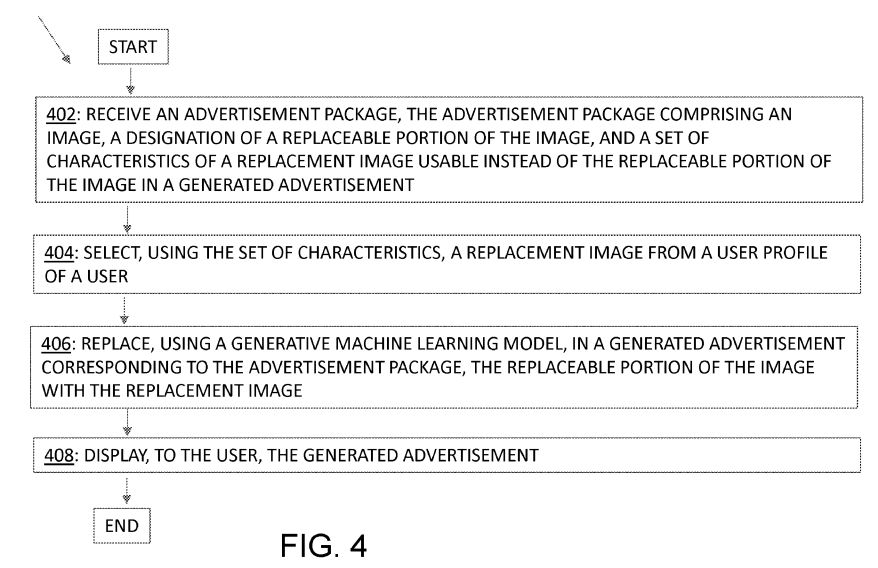
It doesn’t stop there. The patent also describes audio personalization, including inserting the user’s name, mentioning the city where they live, or replacing stock audio with replacement audio data selected from the user profile.
To make it a little creep, it could use the user’s voice-related audio data from recordings they have saved or shared.
Meta’s argument is that different people react differently to the same ad elements, and that more personalization could improve both the user experience and the advertiser’s return.
The patent gives simple examples: someone who dislikes football might respond badly to an ad featuring a football player, while someone who prefers cats over dogs might react more positively to an ad with cats.
From that logic, the company’s proposed solution is to make ads more effective by changing the creative itself, not just the audience targeting behind it.
That is what makes this patent feel more intense than the usual story about personalized advertising.
Most people already assume platforms use their data to decide which ads to show.
This patent points to something more personal. The ad itself could change based on who you are, what is in your profile, who you know, where you live, and what content you seem to like.
An important caveat is that it says use of images as replacement images is on an opt-in basis.
So this is not a document saying Meta plans to secretly grab everyone’s face and drop it into ads tomorrow.
But it is a patent application describing a system that could place identity-linked content inside advertising in a much more literal way than most people are used to.
The broader takeaway is hard to ignore.
For years, digital advertising has been about finding the right person for the right message.
This patent suggests the next step could be generating the message itself around the person watching it. And that is where the whole thing starts to feel unsettling, for some people for sure.
When an ad no longer just follows you around the internet but starts to look and sound like it was assembled from pieces of your life, the line between personalization and intrusion gets a lot thinner.
Social platforms already know a huge amount about their users, and this feature suggests a future where that data might not just determine which ad you see, but who appears inside it.
The underlying insight isn’t new. Market research has shown for years that people respond more strongly to faces they recognize, and even more strongly to their own. What’s changed is the technology.
Generating a convincing, ad-ready image of a specific person used to require a photo shoot. Now it requires a model and a source image.
Google, Amazon, and TikTok are all pushing toward generative ad formats where the creative is assembled on the fly rather than pre-produced.
Meta’s patent application is notable not because it’s alone in the direction, but because it spells out a specific, aggressive version of it — one where the ad’s cast is drawn from the viewer’s own life.