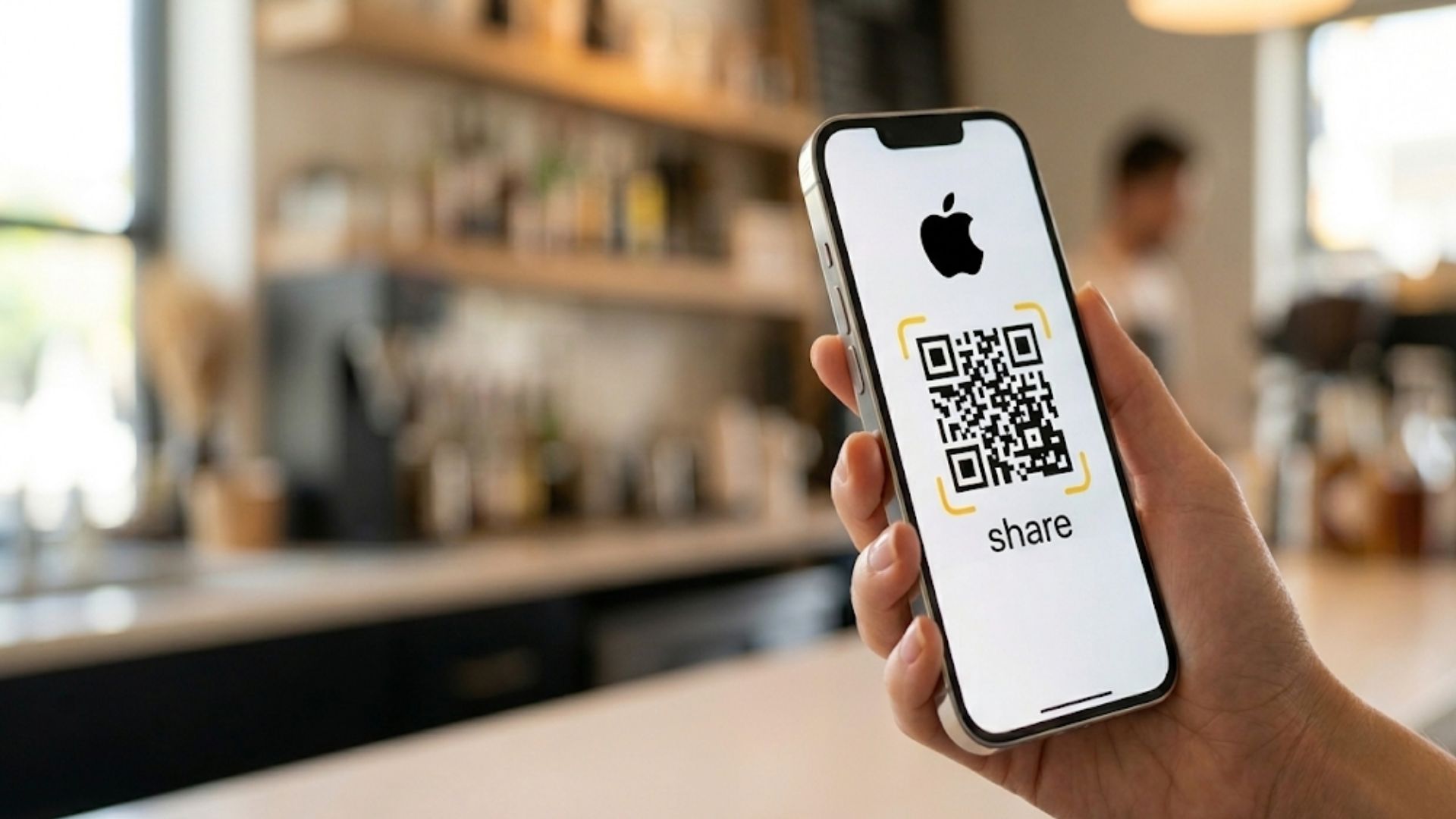
Apple to Make QR Codes Smarter and More Secure for making Data Transfer Reliable
On the surface, QR codes seem convenient and harmless but beneath that simplicity lies a serious security gap that has become harder to ignore as QR codes are used for payments, identity verification, and financial data transfers.
The core problem is that a standard QR code carries no built-in intelligence. Once generated, it can be reused any number of times by anyone who has access to it. There is no mechanism to verify whether the person presenting the QR code is actually authorized to use it. There is no way to confirm that the account behind the QR code is legitimate.
The code can be screenshot, shared digitally, and used to fraudulently initiate transactions.
A bad actor who gets a copy of your payment QR code — through a screenshot, screen recording, or simple interception — could drain your account or load fraudulent transactions without you knowing.
QR code scams, or “quishing,” involve scammers covering legitimate QR codes with fake ones to steal money, personal data, or install malware. Common tactics include fraudulent parking meters, scam payments, and phishing emails leading to fake login pages. Victims may accidentally authorize transactions or download malicious software.
Still QR codes are popular even as a payment method in countries like India and China.
Apple has filed a patent for a better and secure QR code. Rather than treating a QR code as a simple, static image anyone can scan, Apple turns it into a dynamic, intelligent object with a bunch of rules.
These QR codes will be verified before it is created, tied to a specific user account, bound by usage rules, and automatically disabled the moment it has served its purpose.
Apple’s patent explicitly flags this: conventional methods of generating optical images “provide inadequate security measures in verifying users and/or user accounts seeking to transfer data.”
The Shortcomings Apple Identified
Apple’s patent maps out several specific gaps in how QR codes currently work.
First, there is no account-level validation before a QR code is even generated. Anyone who opens a payment app can request a QR code without the system checking whether the request itself is suspicious.
Second, once generated, conventional QR codes have no expiry mechanism tied to account behavior. They can remain valid far longer than necessary, creating a wide window for misuse.
Third, they can be screenshot or screen-recorded and forwarded to another person or device, completely breaking the link between the QR code and its rightful owner.
Fourth, there is no usage limit baked into traditional codes — a single-use code can theoretically be re-scanned multiple times if the backend system is not carefully configured.
Fifth, there is no real-time behavioral analysis running in the background: if a user’s account has been generating and scanning an unusually high number of QR codes in a short window, a sign of fraud, traditional systems have no built-in way to catch and block it.
How Apple’s New QR Code Works
Apple’s solution is a layered system that treats the QR code and barcode not as a static image, but as a verified, time-limited, single-use credential. Here is how it works in plain terms.
When a user opens a payment or wallet app on their iPhone and taps the button to initiate a data transfer, the app does not immediately show a QR code.
Instead, it first sends a request along with the user’s account data to Apple’s service provider backend. That request includes the user’s location (current and past), their biometric or security information (such as Face ID or a PIN), and other account metadata. This package is then routed to a validation server, which analyzes everything before a QR code is ever created.

The server runs a multi-factor scoring model. It checks how far the user’s current location is from their usual locations. So, if someone is scanning in a city they have never visited, that raises the risk score. It cross-checks the biometric or security credentials provided against what is stored on record. It also looks at historical QR code usage: if ten codes were scanned in the last five minutes, that is flagged as highly unusual behavior.
Past suspicious activity on the account adds further weight. All these signals are aggregated into a single validation score. If that score falls below a set threshold the QR code generation proceeds. If the score is too high, the request is rejected outright, with the user notified and the reason provided.
Once approved, the system contacts the issuing device (such as a bank or financial institution) to obtain a unique identifier for that specific transaction. This identifier is embedded into the QR code, so the code is tied not just to the account, but to this exact validated moment.
The issuing device also attaches rules that govern the QR code’s lifespan. These conditions can include an expiration time (e.g., the code expires in 15 minutes if unused), a numerical use limit (typically single-use), and sharing limitations that actually prevent the app from allowing screenshots or screen recordings while the code is displayed.
Once the code is scanned by a third-party device the transfer is completed, the issuing device logs the transaction, and the service provider immediately disables the QR code. It either grays out, changes opacity, or disappears entirely from the app.
Where could Apple deploy this? The most immediate applications are Apple Pay and Apple Wallet, where users already scan codes in retail stores. Beyond payments, this system could apply to loading gift card balances, transferring funds between accounts, loyalty point redemption, and even health or identity data sharing in Apple Health, given the patent’s API references to health sensor and pairing integrations.
Why Apple is working on QR Codes?
From a business standpoint, this patent signals that Apple is preparing to deepen its position in the financial services and digital identity space. These are the areas where trust and security are the primary competitive moat. Apple Pay currently competes with Google Pay, PayPal, and a range of bank-issued apps, many of which rely on similar static QR or barcode infrastructure.
Apple is also launching its Pay services in India, so it would wants to bring something new especially when the market has a competition with platforms like Google Pay and PhonePe.
By introducing a patented, dynamic QR validation layer, Apple can offer its users, merchants, and financial partners a meaningfully more secure transaction pathway that reduces fraud-related losses and builds user confidence in mobile payments.
This also feeds directly into Apple’s broader ecosystem strategy. A secure, validated QR code infrastructure would tightly integrate iPhone hardware (Face ID, GPS), software (Wallet, Health, third-party apps via APIs), and backend services in ways that would be difficult for competitors to replicate.
Financial institutions would need to integrate directly with Apple’s validation and notification pipelines, potentially strengthening Apple’s position as an indispensable intermediary in the payments value chain.
As the regulatory environment around digital payments tightens globally, having a patented, fraud-resistant QR architecture could also support Apple’s compliance positioning in markets like the EU and India, where QR-based payment systems are dominant.
What Apple is describing in this patent is a foundational change in how trust works in the scan-to-pay moment. The QR code, long taken for granted as a simple bridge between two devices, is being rebuilt into a context-aware, account-bound, self-expiring credential.
If Apple brings this to market — whether within Wallet, Apple Pay, or future identity applications — the days of a static, shareable, endlessly reusable QR code being the backbone of secure financial transfers could be numbered. It is a small square getting a significant upgrade.