Samsung’s Vision for Interactive TV: Letting Viewers Choose What They Want to Watch
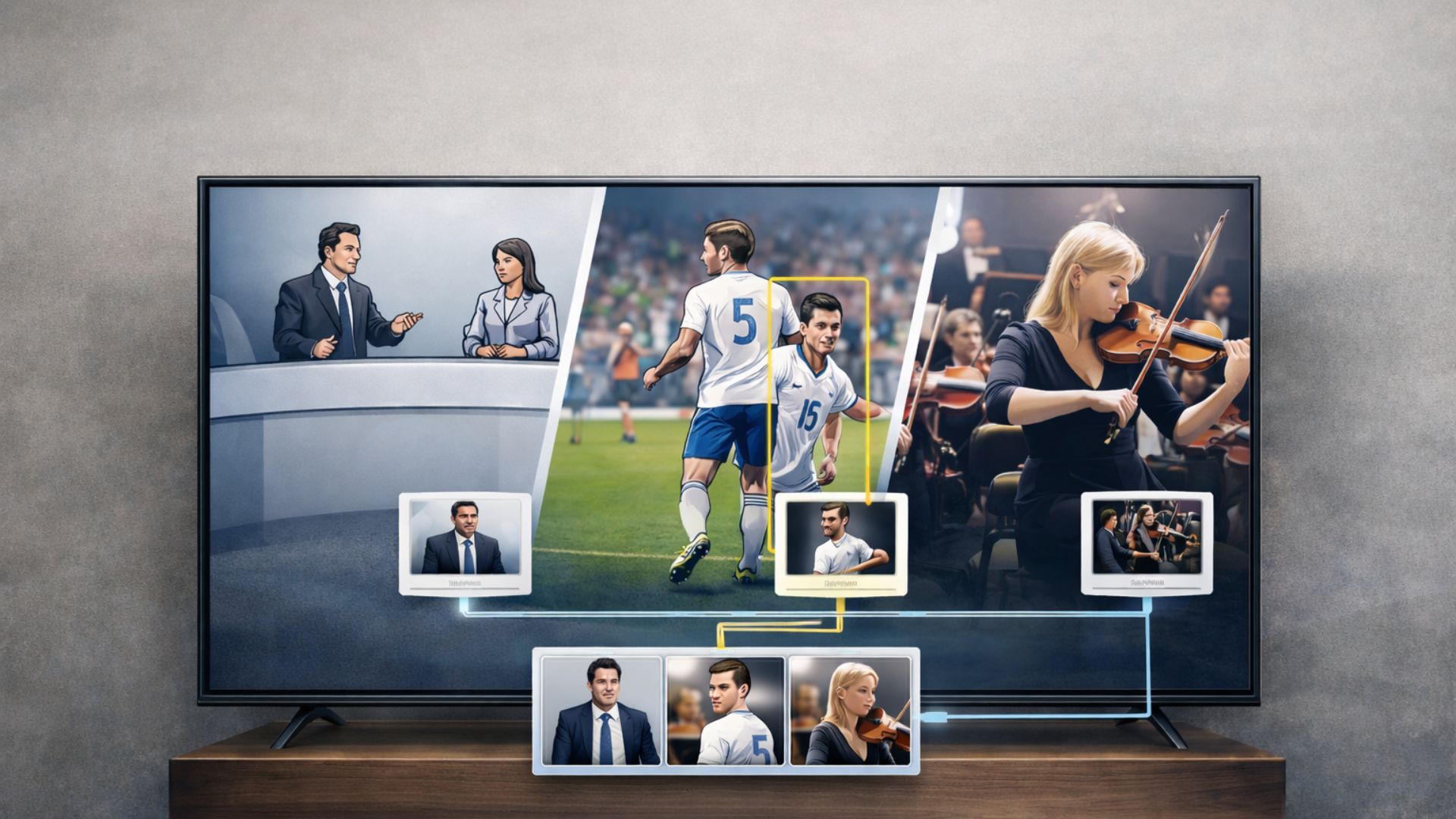
A recently published Samsung patent describes a system where viewers could interact with video content in new ways. Instead of simply watching a broadcast, the viewer could select elements inside the video such as a person, a player, a scene, or a topic and the device would generate additional or customized content around that selection.
This capability would help you follow a specific speaker during a debate, track a particular player during a match, or receive deeper explanations while watching an educational program.
The system analyzes what is happening inside the video and presents viewers with different options. Once the viewer chooses an option, the device creates a personalized version of the content that focuses on that choice.
This approach suggests a future where video becomes more interactive, allowing viewers to shape how they experience the content instead of simply consuming it.
A New Kind of Viewing Experience
The central idea described in the patent is to transform video from a fixed format into something that can adapt to the viewer.
When a program begins playing, the device first analyzes the content being shown. It identifies important elements within the video, such as characters, objects, conversations, scenes, or events. These elements become options that the viewer can select through an on-screen interface.
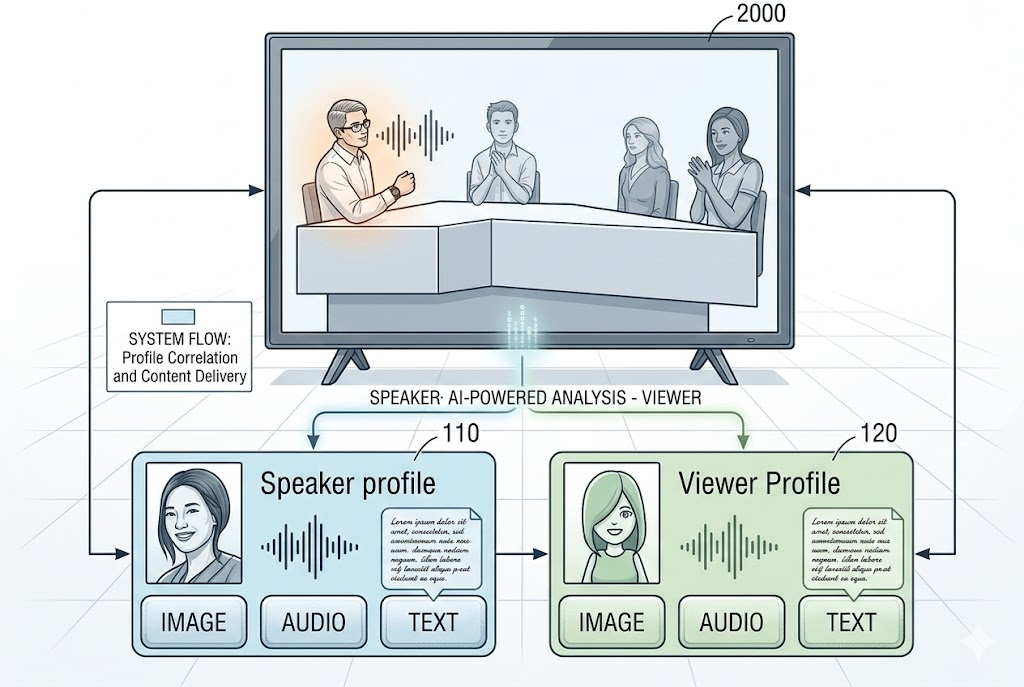
Once a viewer selects one of these elements, the system generates additional content related to that selection. This second layer of content is combined with the original video to create a personalized viewing experience.
In simple terms, the viewer is not changing the program itself. Instead, the system adds new information, highlights, or visual focus based on what the viewer chooses.
The patent describes this as generating a “second content” that corresponds to the viewer’s selection, which is then combined with the original content to produce a personalized result.
This process could allow the same program to be experienced differently by different viewers, depending on what they choose to focus on.
How the System Identifies and Presents Options
To enable these capabilities, the device first analyzes the video to understand what is happening within the scene.
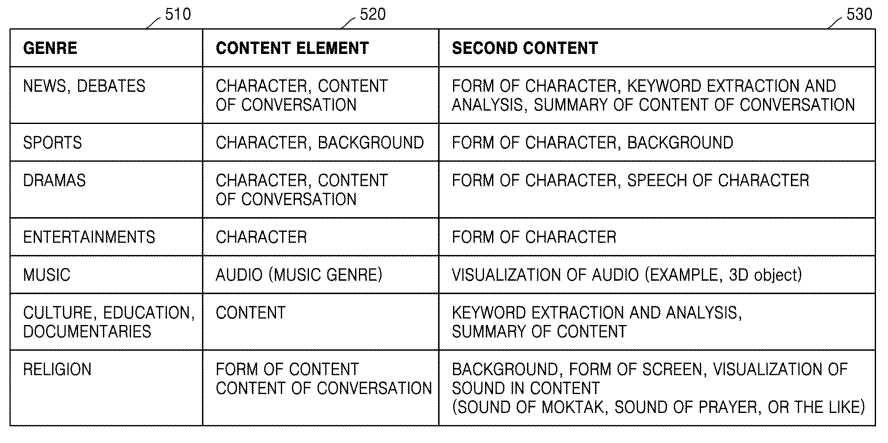
The system may recognize elements such as characters, objects, speech, and visual events. Based on this analysis, it generates selectable options that appear in the user interface.
These options represent parts of the content that the viewer can choose to explore further.
Once the viewer selects one of these elements, the device generates additional content related to that selection. This new content may include visual overlays, summaries, or other forms of information that enhance the original video.
The final viewing experience combines the original content with the newly generated material, creating a personalized result for the viewer.
Interactive Viewing During Debates and News Programs
One of the clearest examples in the patent involves debate or discussion programs.
In a typical debate broadcast, multiple speakers appear on the screen, and the viewer watches the entire discussion as it unfolds. However, different viewers may be interested in different participants or viewpoints.
Samsung’s system could present viewers with selectable elements representing the different speakers. Each participant in the debate could become an option within the interface.
If a viewer selects a specific speaker, the device may generate additional content related to that individual. This could include summaries of their statements, visual emphasis on that speaker, or information related to the topics they discuss.
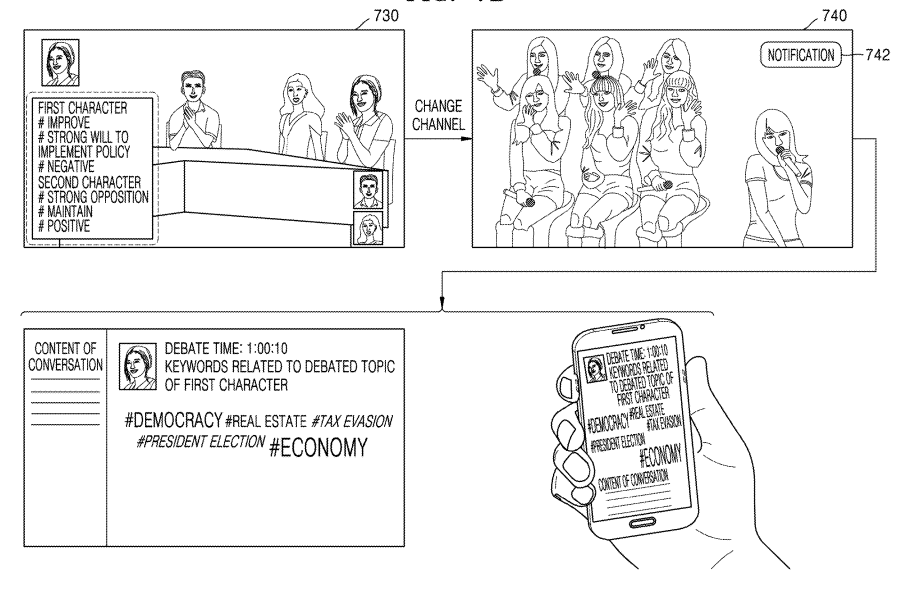
The patent illustrations show a panel discussion where the viewer can choose one participant, and the system highlights that person’s positions or key talking points.
This could allow viewers to follow the arguments of one speaker more closely instead of trying to track multiple participants at once.
In effect, the debate becomes partially customizable, allowing the viewer to focus on the part of the discussion that matters most to them.
Sports Content That Adapts to the Viewer
There are already some interactive content games when it comes to sports like cricket where a user can view a 360 degree view of the game.
During a match, viewers may want to follow specific players, moments, or statistics. However, traditional broadcasts control which player or play receives attention.
The patent describes a system where individual players or events within the match could become selectable elements.
If a viewer selects a particular player, the device could generate additional content related to that player. This might include highlights involving that athlete, visual tracking during gameplay, or contextual information such as statistics and performance summaries.
The illustrations in the patent show sports scenes where individual athletes are highlighted as selectable options on the screen.

This type of feature could allow viewers to tailor the broadcast around their favorite players or specific moments in the game.
Instead of relying entirely on the broadcast director’s choices, viewers could shape their own viewing experience within the match.
Enhanced Viewing for Educational and Documentary Content
The system described in the patent could also be useful in educational or documentary content.
Programs in these genres often contain complex information, and viewers may want additional explanations about certain topics.
According to the patent, elements within the program such as a historical figure, a scientific concept, or an object being discussed could be recognized by the system and presented as selectable options.
When a viewer selects one of these elements, the device could generate related content. This might include explanations, summaries, or visual information that helps the viewer understand the subject more clearly.
For example, while watching a documentary, a viewer might select a specific artifact or concept appearing on the screen. The system could then provide additional context or background information related to that element.
This approach could turn educational programming into a more interactive learning experience.
Cultural and Performance Content
The patent also illustrates how the technology could work in performances such as concerts or stage productions.
In traditional recordings of performances, viewers see the show from a limited set of camera perspectives chosen during production.
With Samsung’s proposed system, different elements of the performance could become selectable options. These might include individual performers, instruments, or sections of the stage.
When a viewer selects one of these elements, the system could generate additional content that emphasizes that part of the performance.
For example, a viewer watching a concert might choose to focus on a specific musician or instrument or dancer.
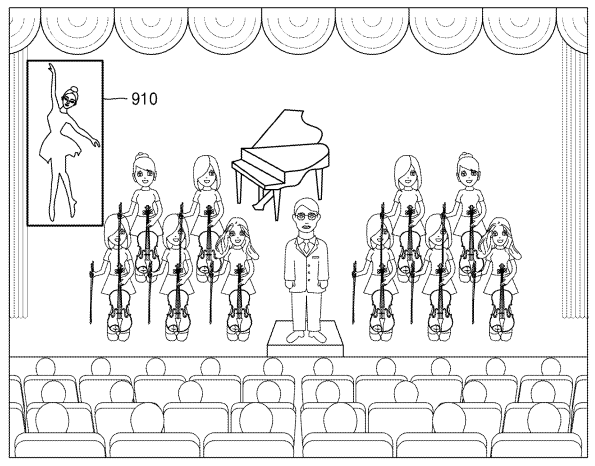
The device could then highlight that performer or provide related visual content.
This would allow viewers to explore different aspects of a performance without altering the original recording itself.
A Step Toward Personalized Media
Samsung’s patent suggests a shift in how video content might be consumed in the future.
Rather than delivering a single fixed experience for every viewer, media platforms may begin offering flexible formats where viewers can interact with the content itself.
In such a system, the same program could be experienced differently depending on the viewer’s interests. One viewer might focus on a specific athlete during a game, while another might explore detailed explanations during a documentary.
By allowing viewers to select elements within a video and receive additional content related to those choices, Samsung’s proposed technology moves toward a more personalized form of media consumption.
If implemented in future devices, this approach could change the way people engage with broadcasts, streaming content, and educational media.
Instead of simply watching a program, viewers may increasingly become participants in shaping their own viewing experience.